
How to Choose a Reliable Activated Carbon Manufacturer in India: 10 Essential Factors for Industrial Buyers
Why Choosing the Right Activated Carbon Manufacturer in India Matters
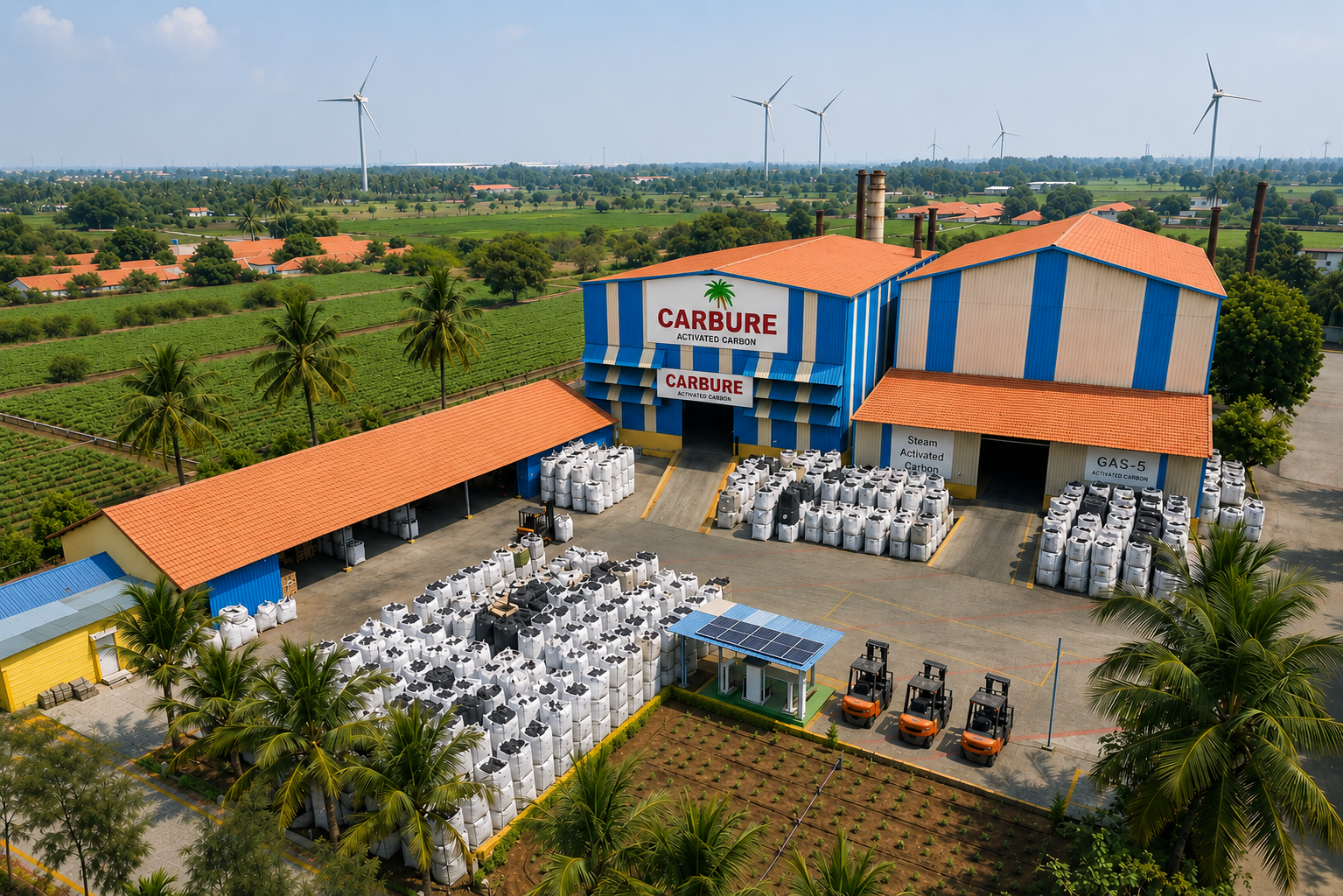
Selecting a reliable Activated Carbon Manufacturer in India is an important decision for industrial buyers who depend on consistent adsorption performance, product quality and uninterrupted material supply.
Activated Carbon plays an important role in water treatment, air and gas purification, gold recovery, chemical processing, food and beverage purification, and other industrial applications.
However, not every Activated Carbon grade delivers the same performance. Raw material characteristics, manufacturing technology, pore structure, technical specifications and operating conditions can significantly influence its suitability for a particular process.
Industrial buyers should evaluate manufacturers based on technical capability, quality control, application-specific expertise and long-term supply reliability rather than purchase price alone.
This guide explains 10 essential factors to consider before selecting an Activated Carbon Manufacturer and Supplier in India.
1. Raw Material Quality and Coconut Charcoal Selection
The quality of Activated Carbon begins with the selection of its raw material. Different raw materials can produce Activated Carbon with different pore structures, mechanical properties and adsorption characteristics.
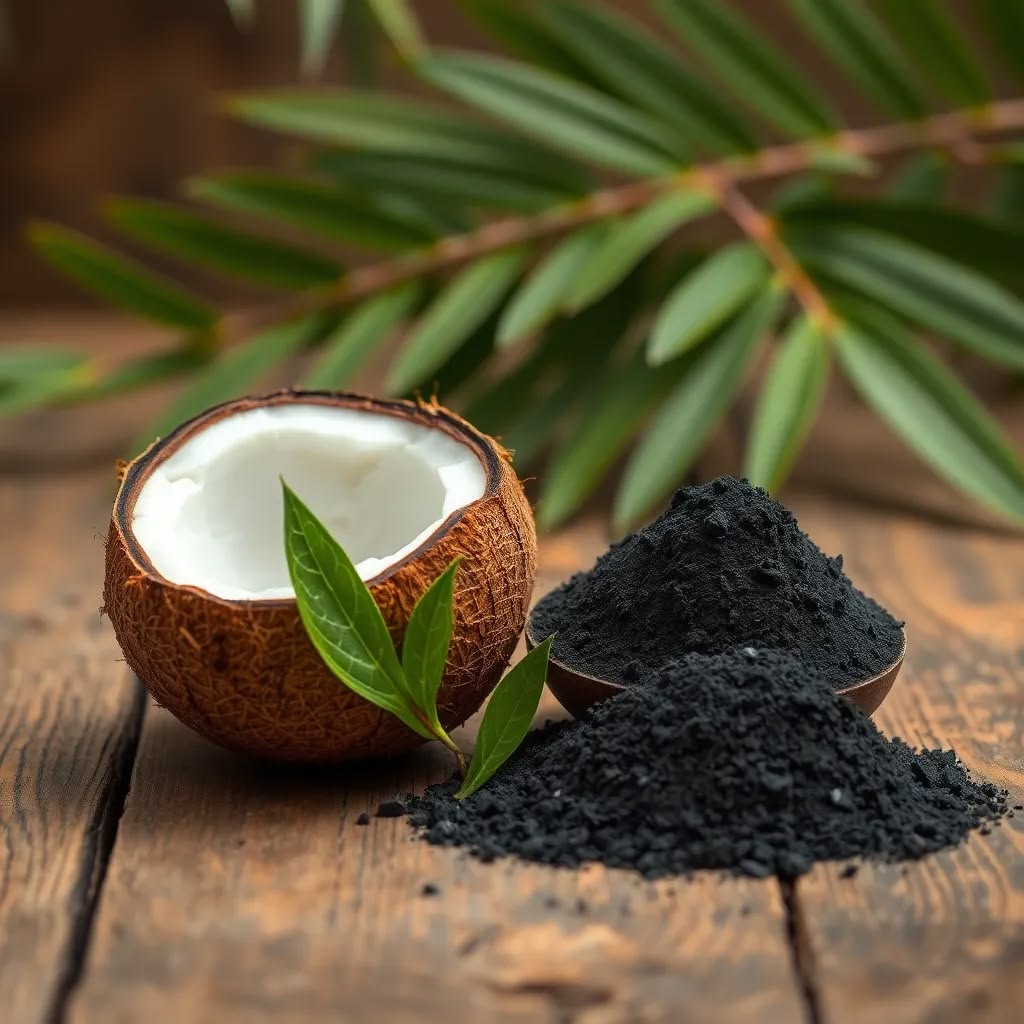
Coconut Charcoal is widely used in the production of Steam Activated Carbon because of its ability to develop a microporous structure and useful mechanical strength during controlled activation.
A reliable manufacturer should evaluate raw material characteristics and maintain suitable controls to support consistency in the finished product.
What Industrial Buyers Should Check
- Source and type of raw material.
- Raw material selection and inspection procedures.
- Consistency of Coconut Charcoal characteristics.
- Moisture and inorganic impurity considerations.
- Raw material availability and traceability.
Consistent raw material selection provides an important foundation for manufacturing Activated Carbon with predictable technical characteristics.
2. Manufacturing Technology and Steam Activation Process
The manufacturing process directly influences the internal pore structure, adsorption characteristics and physical properties of Activated Carbon.
Industrial buyers should understand how the manufacturer controls activation conditions, raw material preparation, particle sizing and final product quality.
At Carbure Activated Carbon, Coconut Charcoal faces superheated steam at 1000°C during controlled activation. This process develops a highly porous internal structure that supports effective adsorption of suitable contaminants in various industrial purification applications.
Important Manufacturing Considerations
- Controlled steam activation technology.
- Monitoring of relevant activation conditions.
- Development of application-specific pore characteristics.
- Controlled crushing, screening and particle sizing.
- Suitable post-treatment for specialty grade requirements.
- Final product inspection and specification verification.
For a detailed overview of manufacturing technology and product types, read our guide on Activated Carbon Manufacturer in India: Products, Manufacturing Process, Applications & Buyer’s Guide.
3. Activated Carbon Product Range and Grade Availability
A reliable Industrial Activated Carbon Manufacturer should be evaluated based on its ability to supply product forms and grades suitable for the buyer's specific application.
Different industrial systems require different particle sizes, adsorption characteristics, physical properties and purity specifications.
Granular Activated Carbon (GAC)
Granular Activated Carbon is commonly used in fixed-bed filtration systems, industrial water treatment, wastewater polishing and other continuous adsorption processes.
Powdered Activated Carbon (PAC)
Powdered Activated Carbon is suitable for selected batch purification and dosing applications where fine carbon particles are contacted with process liquids and subsequently separated.
Pelletized Activated Carbon
Pelletized Activated Carbon may be selected for air and gas purification systems where particle strength, adsorption characteristics and pressure-drop requirements are important.
Gold Recovery Activated Carbon
Gold Recovery Activated Carbon is evaluated for suitable gold adsorption circuits based on adsorption kinetics, loading characteristics, hardness and resistance to attrition.
Acid Washed Activated Carbon
Selected acid-washed grades are considered for applications requiring controlled acid-soluble mineral impurities and inorganic extractables. Learn more about Acid Washed Activated Carbon.
Buyers should confirm the availability, specifications and application suitability of each required grade directly with the manufacturer.
4. Technical Specifications and Adsorption Performance
Technical specifications are essential when comparing different Activated Carbon Suppliers in India. Industrial buyers should evaluate measurable product characteristics instead of relying only on general quality claims.
| Technical Parameter | Importance for Industrial Buyers |
|---|---|
| Iodine Value | Provides an indication of micropore development and supports comparison of relevant carbon grades. |
| Particle Size | Influences filtration characteristics, pressure drop, contact efficiency and handling. |
| Hardness | Helps evaluate mechanical durability and resistance to particle breakdown. |
| Ash Content | Indicates inorganic residue and is important for selected purity-sensitive applications. |
| Moisture Content | Relevant to product handling, storage and dry-weight calculations. |
| pH Value | Helps assess compatibility with specific industrial treatment requirements. |
| Apparent Density | Important for estimating carbon loading and packed-bed volume. |
| Pore Size Distribution | Influences accessibility of adsorption sites for different contaminant molecules. |
| Application-Specific Testing | Helps verify adsorption performance under relevant operating conditions. |
5. Quality Control and Testing Procedures
Quality control is an important factor when selecting a reliable Activated Carbon Manufacturing Company in India.
Manufacturers should have suitable procedures for evaluating raw materials, monitoring production and verifying finished product specifications before dispatch.
Quality Documents Buyers Should Request
- Technical Data Sheet (TDS): Provides relevant product characteristics and grade specifications.
- Certificate of Analysis (COA): Provides measured results for the relevant production batch or lot.
- Safety Data Sheet (SDS): Provides information about safe handling, storage and relevant product hazards.
- Testing Methods: Helps buyers understand how individual technical parameters are measured.
- Application-Specific Documentation: Supports evaluation against relevant industrial or regulatory requirements.
Industrial buyers should verify whether the manufacturer can provide the required documentation and demonstrate compliance with agreed product specifications.
For regulated applications, relevant certifications and approvals should be confirmed for the specific product grade and intended use.
6. Batch-to-Batch Product Consistency
Industrial Activated Carbon requirements often involve repeated purchases and continuous operation. A carbon grade that performs well during initial testing should also maintain its agreed characteristics across subsequent supplies.
Variations in particle size, hardness, ash content or adsorption characteristics may influence filtration performance, pressure drop, carbon consumption and replacement schedules.
How to Evaluate Product Consistency
- Request technical data from multiple production batches where available.
- Review agreed specification limits and acceptable tolerances.
- Understand the manufacturer's sampling and testing procedures.
- Confirm batch identification and traceability.
- Discuss procedures for managing non-conforming products.
- Evaluate repeat-order performance under actual operating conditions.
A reliable manufacturer should support consistent product specifications through controlled manufacturing, quality testing and suitable documentation.
7. Application-Specific Activated Carbon Selection
One of the most important factors in choosing an Activated Carbon Manufacturer in India is the manufacturer's ability to understand the intended industrial application.
Different industries have different purification objectives, operating conditions and technical requirements. A carbon grade suitable for one application may not be suitable for another.
| Industrial Application | Important Selection Factors |
|---|---|
| Water Treatment | Target contaminants, contact time, particle size, pore structure and treated water requirements. |
| Wastewater Treatment | Organic contaminant profile, competing substances, pretreatment and adsorption performance. |
| Air and Gas Purification | Gas composition, humidity, temperature, adsorption capacity and pressure drop. |
| Gold Recovery | Gold adsorption kinetics, loading characteristics, particle size, hardness and attrition resistance. |
| Food and Beverage Processing | Purity requirements, target impurities, grade suitability and applicable quality standards. |
| Pharmaceutical Processing | Application-specific purity, extractables, technical documentation and regulatory requirements. |
| Chemical Manufacturing | Process chemistry, target contaminants, operating conditions and product compatibility. |
Industrial buyers should share their process requirements with the manufacturer and request appropriate technical recommendations before finalizing the carbon grade.
8. Manufacturing Capacity and Supply Reliability
For industrial buyers purchasing Activated Carbon in bulk, manufacturing capacity and supply reliability are important commercial considerations.
Delays in material supply can affect production schedules, filtration operations and planned maintenance activities. Buyers should evaluate whether the manufacturer can support their expected order volumes and delivery requirements.
Supply Factors to Evaluate
- Available manufacturing capacity for the required grade.
- Ability to fulfil bulk and recurring orders.
- Raw material procurement and availability.
- Production scheduling and inventory planning.
- Expected manufacturing and dispatch lead times.
- Packaging and transportation arrangements.
- Communication regarding order status and delivery schedules.
A reliable Bulk Activated Carbon Supplier in India should communicate realistic production schedules, product availability and delivery commitments based on the buyer's requirements.
9. Export Capabilities and Documentation
International buyers sourcing Activated Carbon from India should evaluate the manufacturer's ability to support export requirements alongside technical product quality.
Export procurement involves product specifications, packaging, shipment planning, commercial terms and documentation relevant to the destination country.
Important Export Considerations
- Product-specific technical documentation.
- Certificate of Analysis and Safety Data Sheet.
- Suitable packaging for transportation and storage.
- Commercial invoice and packing list.
- Certificate of origin where required.
- Applicable transport classification and shipment documentation.
- Agreed delivery terms and shipment schedules.
- Destination-specific regulatory requirements.
International buyers should confirm these requirements with the Activated Carbon Manufacturer and Exporter in India before placing an order.
10. Technical Support and Long-Term Procurement Value
Choosing an Activated Carbon manufacturer should involve evaluating long-term operational value rather than comparing purchase prices alone.
A lower-priced carbon may not provide the most economical solution if it results in higher carbon consumption, frequent replacement, increased handling requirements or unsuitable adsorption performance.
Factors That Influence Lifecycle Value
- Application-specific adsorption performance.
- Carbon consumption and replacement frequency.
- Mechanical durability and attrition losses.
- Filtration system operating costs.
- Handling, storage and transportation requirements.
- Product consistency across repeat orders.
- Technical communication and application support.
Manufacturers who understand the customer's treatment objectives can help evaluate suitable product grades and relevant technical specifications.
Activated Carbon Manufacturer Evaluation Checklist for Industrial Buyers
Before finalizing an Activated Carbon purchase, industrial buyers can use the following checklist to compare manufacturers and evaluate their suitability.
| Evaluation Factor | What Buyers Should Verify |
|---|---|
| Raw Material Quality | Raw material type, selection procedures and consistency. |
| Manufacturing Technology | Activation process and relevant production controls. |
| Product Range | Availability of suitable forms and application-specific grades. |
| Technical Specifications | Grade-specific properties and relevant test results. |
| Quality Control | Testing procedures, documentation and acceptance criteria. |
| Batch Consistency | Repeat-order quality and product traceability. |
| Application Suitability | Performance testing under relevant process conditions. |
| Supply Reliability | Manufacturing capacity, availability and lead times. |
| Export Capabilities | Packaging, shipment terms and required documentation. |
| Technical Support | Grade recommendations, communication and long-term procurement value. |
Evaluating these factors together helps industrial buyers make informed procurement decisions based on technical performance, commercial requirements and supply reliability.
Why Choose Carbure Activated Carbon Pvt. Ltd.?
Carbure Activated Carbon Pvt. Ltd. is an Activated Carbon Manufacturer in India specializing in Coconut Charcoal based Steam Activated Carbon for industrial adsorption and purification applications.
At Carbure, Coconut Charcoal faces superheated steam at 1000°C during controlled activation, developing the internal pore structure required for adsorption.
Carbure focuses on manufacturing Activated Carbon for different industrial requirements, with attention to product specifications, application suitability and quality consistency.
Discuss Your Industrial Activated Carbon Requirements
- Coconut Charcoal based Steam Activated Carbon.
- Granular and Powdered Activated Carbon requirements.
- Pelletized and specialty Activated Carbon grades.
- Gold Recovery Activated Carbon requirements.
- Application-specific technical specifications.
- Product testing and quality documentation requirements.
- Bulk procurement and export enquiries.
- Technical discussions for industrial grade selection.
Industrial buyers can contact Carbure Activated Carbon to discuss their process requirements, target contaminants, required carbon specifications, order quantities and supply expectations.
Product-specific availability, performance and compliance requirements should be confirmed before finalizing procurement.
Frequently Asked Questions – Activated Carbon Manufacturer in India
Evaluate raw material quality, manufacturing technology, technical specifications, batch consistency, application-specific performance, quality documentation, supply reliability and technical support before selecting a manufacturer.
Raw material characteristics influence the pore structure, mechanical strength, ash content and consistency of the finished activated carbon. Controlled raw material selection supports reliable manufacturing quality.
Industrial buyers should evaluate iodine value, particle size, hardness, moisture, ash content, pH, pore structure and application-specific adsorption performance according to their treatment requirements.
No. Buyers should consider adsorption performance, carbon consumption, replacement frequency, operating costs, product consistency and overall lifecycle value rather than purchase price alone.
Batch-to-batch consistency helps industrial buyers maintain predictable product characteristics and supports stable treatment operations. Batch testing and agreed acceptance limits should be used to verify consistency.
International buyers should verify product specifications, quality documentation, manufacturing capacity, packaging, lead times, shipment terms, applicable regulatory requirements and export documentation.
Looking for a Reliable Activated Carbon Manufacturer in India?
Carbure Activated Carbon Pvt. Ltd. manufactures Coconut Charcoal based Steam Activated Carbon for industrial adsorption and purification requirements. Whether you require Granular Activated Carbon, Powdered Activated Carbon, Pelletized Activated Carbon, Gold Recovery Activated Carbon or specialty grades, contact our team to discuss your application, technical specifications, quality documentation, bulk procurement and export requirements.
