
Transforming Waste into Value: The Process of Coconut Shell Activated Carbon
Introduction
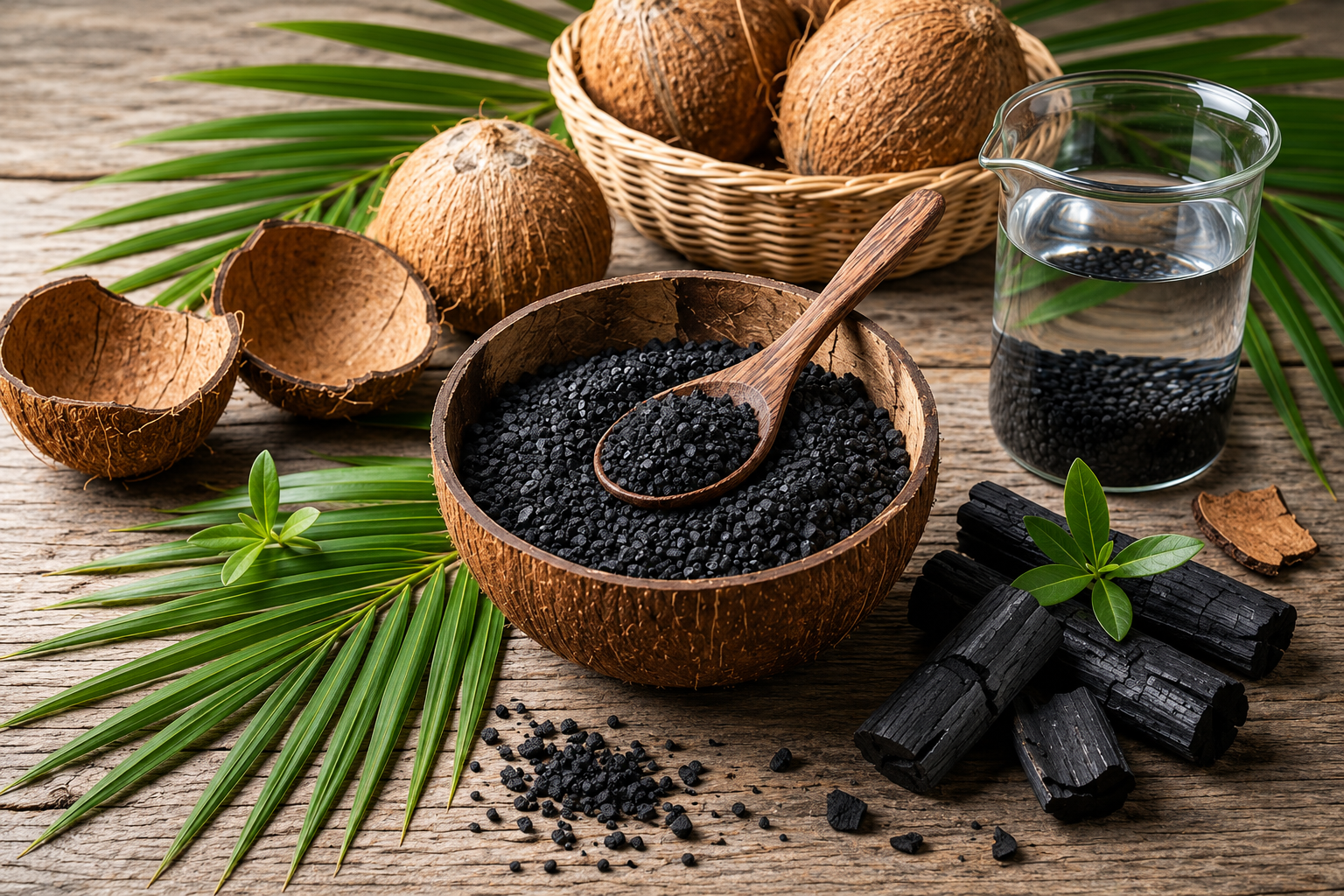
Coconut shells, once considered agricultural waste, are now transformed into one of the world’s most powerful purification materials - Steam Activated Carbon. Through advanced carbonization and steam activation processes, Coconut Charcoal becomes a high-performance adsorption material used across global industries.
The transformation process converts discarded coconut shell waste into a valuable industrial purification solution with exceptional adsorption capability and environmental benefits.
Through advanced carbonization and steam activation technology, ordinary agricultural waste is engineered into high-performance Steam Activated Carbon capable of removing contaminants, odors, gases, colors, and dissolved organic compounds from liquids and air streams.
The highly porous structure developed during activation creates a massive internal surface area ranging from 600–2000 m²/g, enabling efficient adsorption performance across demanding industrial applications.
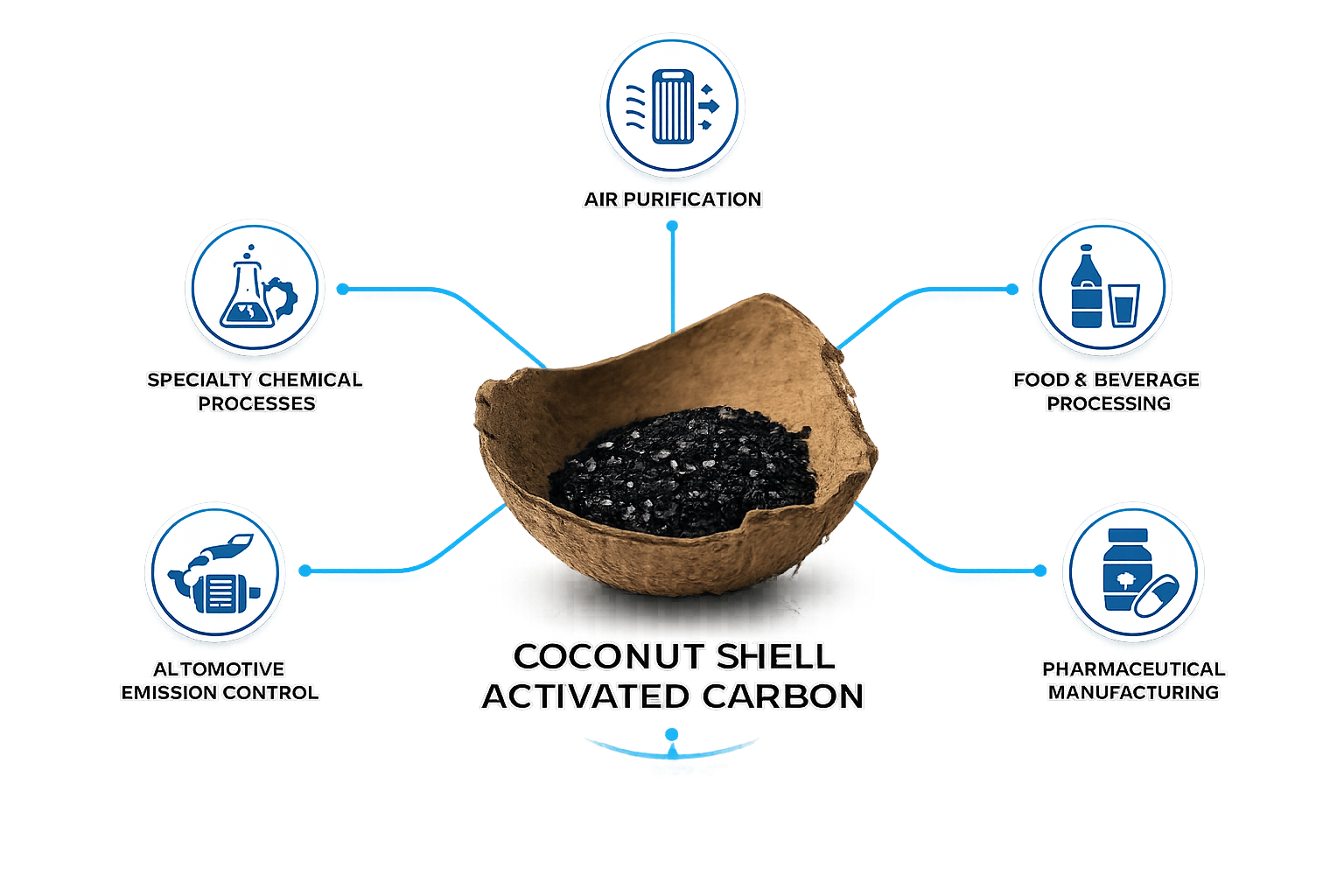
This sustainable transformation process not only reduces agricultural waste but also supports eco-friendly industrial purification systems used in water treatment, air purification, chemical processing, pharmaceutical filtration, food and beverage purification, and gold recovery industries.
Carbure Activated Carbon utilizes strict quality control processes and advanced steam activation systems to manufacture reliable Activated Carbon solutions engineered for global industrial purification requirements.
Why Coconut Shells?
Coconut shells are widely preferred for Activated Carbon manufacturing because of their exceptional hardness, low ash content, and superior micropore development capability.
Compared to other raw materials, Coconut Charcoal produces highly durable Steam Activated Carbon with excellent adsorption performance for water treatment, air purification, VOC control, gold recovery, and industrial filtration systems.
The natural density and carbon structure of coconut shells make them ideal for developing high surface area Activated Carbon products suitable for demanding industrial applications.
Manufacturing Process
The manufacturing process begins with carefully selected coconut shells that undergo controlled carbonization to reduce volatile compounds and create a stable carbon-rich structure.
The resulting Coconut Charcoal is then exposed to superheated steam at 1000°C during the activation stage. This process develops millions of micropores, mesopores, and macropores within the carbon structure.
The advanced pore network significantly increases the internal surface area, enabling efficient adsorption of contaminants, odors, gases, colors, and dissolved impurities from liquids and air streams.
Through advanced steam activation technology, coconut shell waste is transformed into highly efficient Steam Activated Carbon engineered for demanding industrial purification applications worldwide.
Steam Activation Technology
Steam activation plays a critical role in transforming ordinary carbon material into highly efficient Steam Activated Carbon.
During activation, controlled oxidation expands the internal pore structure and improves adsorption efficiency, contaminant capture capability, and operational stability.
Carbure Activated Carbon utilizes advanced steam activation technology and strict quality control systems to manufacture high-performance Activated Carbon solutions for industrial purification applications worldwide.
Sustainability Benefits
Transforming coconut shell waste into Activated Carbon supports sustainable manufacturing and circular economy practices by converting agricultural by-products into valuable industrial materials.
The process reduces waste generation, promotes resource efficiency, and provides eco-friendly purification solutions for modern industries seeking sustainable operational practices.
By converting discarded coconut shells into high-value Steam Activated Carbon, the manufacturing process supports circular economy initiatives and minimizes environmental impact associated with agricultural waste disposal.
The use of Coconut Charcoal as a renewable raw material helps industries adopt more sustainable purification technologies while maintaining high adsorption efficiency and operational performance.
Steam Activated Carbon manufactured from coconut shells also contributes to cleaner water, improved air quality, reduced industrial emissions, and efficient contaminant removal across various industrial sectors.
Carbure Activated Carbon focuses on sustainable manufacturing practices and advanced steam activation technology to deliver environmentally responsible purification solutions for global industrial applications.
Transforming Waste into Value with Coconut Shell Activated Carbon
Carbure Activated Carbon transforms discarded coconut shell waste into high-performance Steam Activated Carbon through advanced carbonization and steam activation technology. Our sustainable manufacturing process converts agricultural by-products into valuable industrial purification solutions used across water treatment, air purification, chemical processing, and environmental applications worldwide.
Using superheated steam activation at 1000°C, we develop highly porous Activated Carbon with exceptional adsorption performance, consistent quality, and reliable global supply capability for demanding industrial applications.
FAQs
Carbure Activated Carbon explains that Coconut Shell Activated Carbon is a highly porous adsorption material manufactured through controlled carbonization and steam activation processes.
Carbure Activated Carbon uses Coconut Charcoal because of its superior hardness, low ash content, and advanced micropore development capability.
Carbure Activated Carbon utilizes superheated steam activation at 1000°C to develop extensive pore structures that significantly improve adsorption efficiency and purification performance.
Carbure Activated Carbon transforms coconut shell waste into valuable Steam Activated Carbon, supporting sustainable manufacturing, waste reduction, and eco-friendly industrial purification applications.
