
Process Water Treatment: Activated Carbon for Industrial Water Purification
Introduction
Process Water Treatment is an important industrial purification process used to improve the quality of water before it is utilized in manufacturing, chemical processing, food production, pharmaceuticals, textiles, power generation and other industrial operations.
Industrial process water may contain dissolved organic compounds, residual chlorine, color-causing substances, odor-producing chemicals and other contaminants that can affect production efficiency, equipment performance and finished product quality.
Activated Carbon is widely used in Process Water Treatment because its highly porous structure can adsorb selected dissolved organic contaminants, unwanted color and odor-causing substances. It can also support chlorine reduction through surface reactions.
Carbure Activated Carbon manufactures high-performance Steam Activated Carbon in India for industrial water purification applications requiring strong adsorption capacity, consistent quality and reliable filtration performance.
What is Process Water Treatment?
Process Water Treatment refers to the treatment and purification of water used directly or indirectly in industrial manufacturing processes. The required water quality depends on the type of industry, production method, equipment requirements and final product specifications.
Water obtained from municipal supplies, borewells, rivers, reservoirs or other sources may contain contaminants such as suspended solids, dissolved salts, organic substances, chlorine, pesticides and other impurities.
These contaminants can affect industrial operations by contributing to unwanted chemical reactions, product discoloration, membrane fouling, deposits, corrosion or inconsistent process quality.
Industrial water treatment systems may combine several technologies, including sediment filtration, coagulation, softening, reverse osmosis, ion exchange, ultraviolet disinfection and Activated Carbon filtration.
Activated Carbon is particularly useful where selected dissolved organic compounds, residual chlorine, taste, odor and color need to be reduced before water enters sensitive manufacturing processes.
The appropriate treatment system depends on the incoming water characteristics and the quality required for the intended industrial application.
Process Water Treatment Process
The Process Water Treatment process begins with evaluating the incoming water quality. Important parameters may include turbidity, pH, total dissolved solids, hardness, residual chlorine, total organic carbon, chemical oxygen demand and other application-specific contaminants.
Initial treatment stages are generally used to remove suspended solids, sediment and larger particles. Depending on the water source, pretreatment may involve screening, coagulation, sedimentation or multimedia filtration.
Following preliminary treatment, Activated Carbon can be incorporated into the water purification system to adsorb selected dissolved organic compounds, reduce chlorine and improve water taste, odor and color.
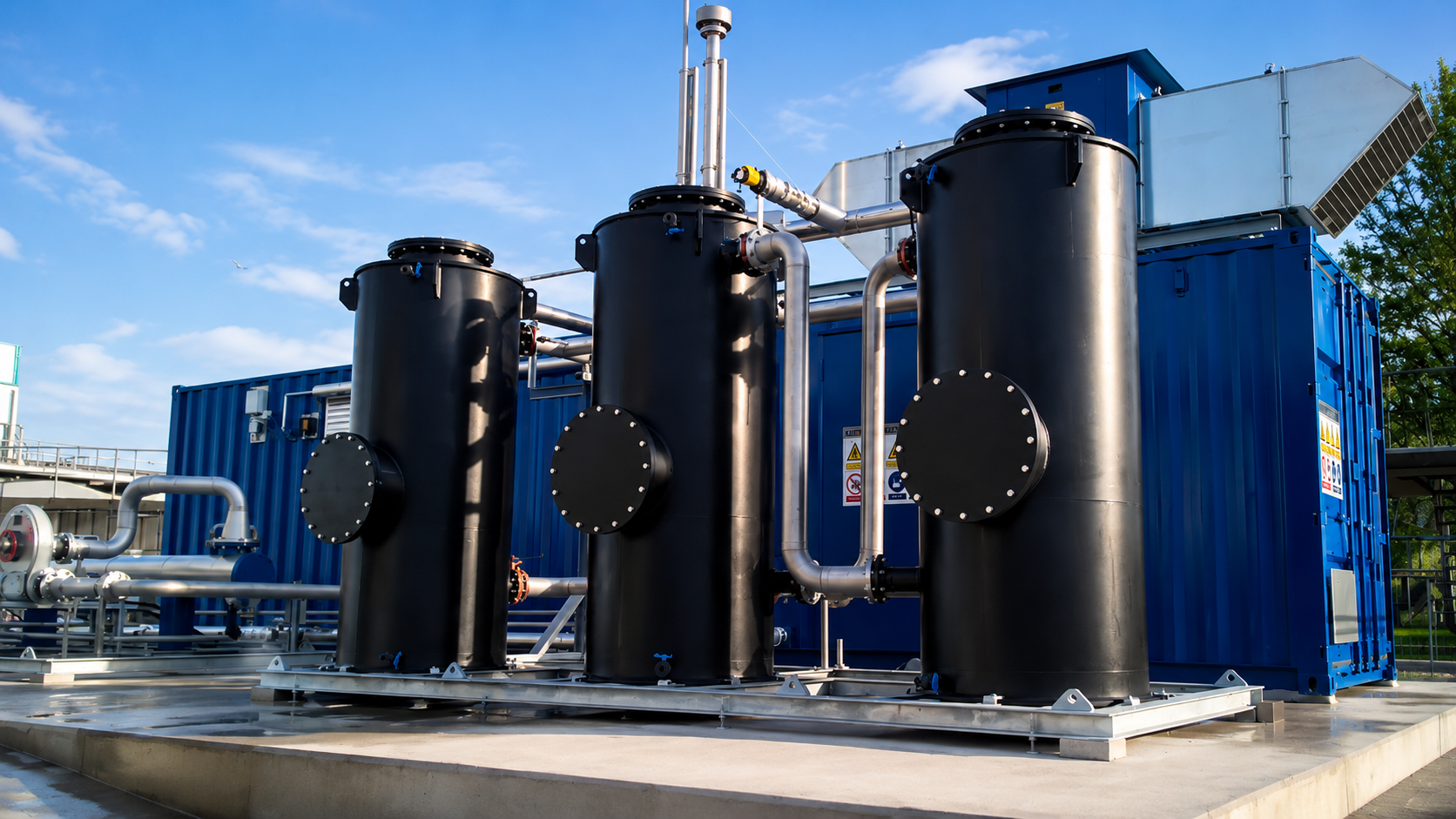
In many industrial systems, Granular Activated Carbon (GAC) is installed in pressure vessels or fixed-bed filtration units. Water flows through the carbon bed, allowing dissolved contaminants to contact the porous carbon surfaces.
Where suitable, Powdered Activated Carbon (PAC) may be introduced into a treatment stage for adsorption before being separated through clarification or filtration.
After Activated Carbon treatment, the water may undergo additional purification through reverse osmosis, ion exchange, membrane filtration or other technologies depending on the final process requirements.
The effectiveness of Activated Carbon in Process Water Treatment depends on the carbon grade, pore structure, contaminant concentration, contact time, water temperature, flow rate and overall treatment system design.
Role of Activated Carbon in Process Water Treatment
Activated Carbon plays an important role in industrial water purification by adsorbing selected dissolved contaminants that may remain after conventional physical filtration.
Its extensive internal pore structure provides a large adsorption surface where suitable organic molecules, color-causing substances and odor-producing compounds can be retained.
One important application is the reduction of free chlorine in water before sensitive industrial processes or reverse osmosis membranes. Activated Carbon can facilitate chlorine removal through surface reactions, helping protect chlorine-sensitive treatment equipment.
Activated Carbon can also help reduce certain dissolved organic contaminants that contribute to unwanted odor, color or process water quality problems.
Depending on the water quality and treatment objective, Activated Carbon may be used as a pretreatment medium, an intermediate purification stage or a final polishing treatment.
Correct carbon selection is essential because different contaminants vary in molecular size, concentration and adsorption behavior. The selected carbon grade should provide suitable pore accessibility, adsorption capacity, particle size and mechanical strength.
Key Benefits of Activated Carbon for Process Water Treatment
High-quality Activated Carbon can provide several benefits when incorporated into a properly designed industrial Process Water Treatment system.
- Helps reduce residual chlorine in industrial process water
- Adsorbs selected dissolved organic contaminants
- Supports reduction of unwanted odor and color
- Helps improve water clarity and overall process quality
- Supports reverse osmosis pretreatment applications
- Can reduce selected organic compounds before downstream purification
- Provides a developed internal surface area for adsorption
- Can be integrated into industrial fixed-bed filtration systems
- Supports consistent water quality when correctly operated and maintained
- Available in different grades for application-specific treatment requirements
The actual treatment performance depends on the selected carbon, contaminant characteristics, system design and operating conditions.
Industrial Applications of Process Water Treatment
Industrial process water is used across multiple sectors where water quality can influence production efficiency, equipment condition and finished product characteristics.
Pharmaceutical Industry
Pharmaceutical manufacturing requires controlled water quality for different production and cleaning operations. Activated Carbon can support selected pretreatment requirements, including chlorine reduction and organic contaminant adsorption, before additional validated purification stages.
Food and Beverage Processing
Process water is used in beverage production, food preparation, ingredient processing, equipment cleaning and related operations. Activated Carbon can help reduce chlorine, taste, odor and selected organic impurities where appropriate for the process.
Textile Industry
Textile manufacturing uses water in dyeing, washing, bleaching and finishing operations. Process Water Treatment helps control water quality and reduce impurities that may affect product consistency and processing results.
Chemical Manufacturing
Chemical processing facilities require water for manufacturing, dilution, washing, formulation and utility operations. Activated Carbon can support the removal of selected organic contaminants that may interfere with process requirements.
Power Generation
Power generation facilities require treated water for boiler feed preparation, cooling systems and other utility applications. Activated Carbon may be used within pretreatment systems where removal of chlorine or selected organic contaminants is required.
Electronics and Precision Manufacturing
Electronics and precision manufacturing operations often require highly purified water. Activated Carbon can support upstream pretreatment before advanced technologies such as reverse osmosis, ion exchange and other high-purity water systems.
Quality Factors in Process Water Treatment
The performance of Activated Carbon in Process Water Treatment depends on the characteristics of the carbon and the operating conditions of the purification system.
- Pore structure: Should provide suitable accessibility for the target contaminants.
- Adsorption capacity: Influences the amount of selected impurities the carbon can retain.
- Carbon hardness: Important for maintaining granular particle integrity during operation and backwashing.
- Particle size: Influences pressure drop, hydraulic characteristics and adsorption performance.
- Contact time: Sufficient water-to-carbon contact is required for the intended treatment objective.
- Flow rate: Must be compatible with the carbon bed and filtration system design.
- Water temperature: Can influence adsorption behavior and treatment performance.
- Feed water quality: Contaminant type and concentration determine the required treatment approach.
- Carbon bed condition: Fouling, channeling and exhaustion can reduce treatment performance.
- Monitoring: Routine water quality testing helps identify when maintenance or carbon replacement is required.
Activated Carbon for Chlorine Removal in Process Water
Chlorine reduction is an important objective in many Process Water Treatment applications. Municipal and industrial water supplies may contain residual chlorine introduced during disinfection.
Although chlorine is useful for controlling microorganisms in water distribution systems, residual chlorine can interfere with certain industrial processes and damage chlorine-sensitive equipment, including many polyamide reverse osmosis membranes.
Activated Carbon can facilitate free chlorine removal through reactions occurring at the carbon surface. This makes it a commonly used pretreatment medium before selected industrial filtration and membrane systems.
Effective dechlorination depends on factors such as carbon grade, bed depth, water flow rate, contact time, temperature and the concentration of chlorine in the incoming water.
Where chloramine is present, different carbon characteristics and contact requirements may be necessary. Activated Carbon systems must therefore be selected according to the actual disinfectant present in the water.
For reliable operation, process water should be monitored before and after treatment to confirm that the required residual chlorine specification is achieved.
Powdered vs. Granular Activated Carbon for Process Water Treatment
| Powdered Activated Carbon | Granular Activated Carbon |
|---|---|
| Can provide rapid contact with water in batch or dosing treatment systems. | Commonly used in fixed-bed filtration and continuous water treatment systems. |
| Often selected for temporary or variable organic contaminant treatment requirements. | Suitable for continuous adsorption and process water polishing applications. |
| Requires downstream separation through clarification or filtration. |
Frequently Asked Questions - Process Water Treatment
Process Water Treatment is the purification and conditioning of water used in industrial manufacturing and production processes. It helps reduce unwanted impurities such as suspended particles, dissolved organic compounds, residual chlorine, color, odor, and other contaminants that may affect production efficiency, equipment performance, and finished product quality.
Activated Carbon is used in Process Water Treatment because its highly porous structure provides extensive internal surface area for adsorption. It helps remove selected dissolved organic compounds, color-causing substances, and odor-producing contaminants. Activated Carbon also supports chlorine reduction, making it useful in industrial water purification and reverse osmosis pretreatment systems.
Yes. Properly selected Activated Carbon can reduce free chlorine through reactions at the carbon surface. This is particularly useful before chlorine-sensitive equipment such as certain reverse osmosis membranes. Performance depends on the carbon grade, chlorine concentration, flow rate, contact time, and filtration system design. Chloramine treatment may require different carbon characteristics and contact conditions.
The appropriate Activated Carbon grade depends on the incoming water quality, target contaminants, treatment objectives, flow rate, contact time, and filtration system design. Granular Activated Carbon (GAC) is commonly used in continuous fixed-bed filtration systems, while Powdered Activated Carbon (PAC) may be used in suitable dosing and batch treatment applications.
Process Water Treatment is widely used in pharmaceutical manufacturing, food and beverage processing, textile production, chemical manufacturing, power generation, electronics, automotive production, and other industrial sectors. Each industry requires different water quality specifications based on its manufacturing processes and equipment requirements.
Yes. Carbure Activated Carbon manufactures and supplies Steam Activated Carbon for industrial water purification and liquid-phase adsorption applications. Suitable grades can be evaluated according to organic contaminant removal, chlorine reduction, adsorption capacity, particle size, hardness, and process water quality requirements.
Looking for Activated Carbon for Process Water Treatment?
Carbure Activated Carbon supplies high-performance Activated Carbon for Process Water Treatment, industrial water purification, chlorine reduction, organic contaminant adsorption, odor control, color reduction, and final water polishing. Our Activated Carbon solutions support process water requirements in pharmaceutical manufacturing, food and beverage processing, textile production, chemical industries, power generation, and other industrial applications.
Our Steam Activated Carbon is manufactured using premium Coconut Charcoal and activated with superheated steam at 1000°C to develop a highly porous structure suitable for selected industrial adsorption applications. Depending on the grade, our Activated Carbon offers a surface area ranging from 600–2000 m²/g.
Contact Carbure Activated Carbon for suitable carbon grades, technical specifications, bulk requirements, and dependable supply for industrial Process Water Treatment applications across India and international markets. Our technical team can help evaluate the appropriate carbon grade based on your incoming water quality, treatment objectives, flow conditions, and purification requirements.
