
Industrial Oil Purification Using Activated Carbon: Process, Benefits & Selection Guide
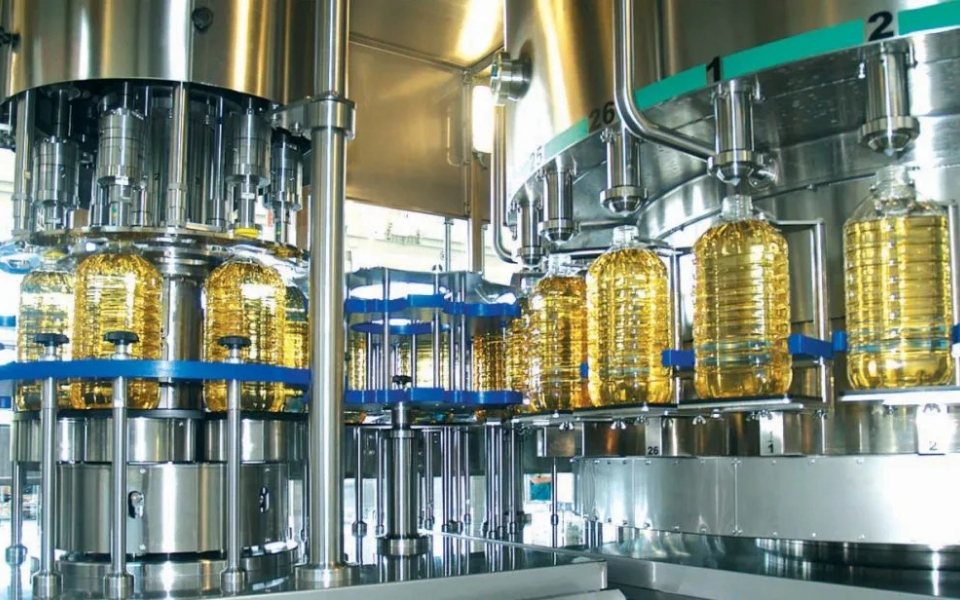
What is Industrial Oil Purification?
Industrial Oil Purification is a treatment process used to improve the quality, appearance, stability and suitability of oils by reducing selected unwanted impurities. Depending on the type of oil and manufacturing process, these impurities may include color bodies, odor-causing compounds, oxidation by-products and dissolved organic contaminants.
Activated Carbon is widely used as an adsorbent in selected oil purification processes because its highly porous internal structure provides a large surface for interaction with impurities.
During Industrial Oil Purification Using Activated Carbon, the selected carbon grade is brought into contact with the oil under controlled process conditions. Target compounds are adsorbed onto the internal pore surfaces of the carbon, after which the spent carbon is separated from the purified oil.
The effectiveness of the process depends on several factors, including the type of oil, nature and concentration of impurities, Activated Carbon grade, pore structure, dosage, contact time, temperature and filtration method.
Why is Activated Carbon Used for Industrial Oil Purification?
Activated Carbon is valued in oil purification because it can selectively adsorb many organic compounds that may influence oil color, odor, purity and downstream processing.
Its performance comes from an extensive network of microscopic pores developed during activation. These pores provide a large internal surface on which suitable molecules can be retained.
Depending on the Activated Carbon grade and the oil being processed, treatment may support:
- Reduction of selected color bodies
- Adsorption of odor-causing organic compounds
- Reduction of selected oxidation by-products
- Adsorption of selected dissolved organic impurities
- Improvement of oil appearance
- Purification before downstream processing
- Polishing of selected process oils
Activated Carbon performance is application-specific. A grade that performs well for one oil or contaminant may not provide the same results for another.
How Does Activated Carbon Purify Industrial Oil?
The primary mechanism involved in many Activated Carbon oil purification applications is adsorption.
Adsorption differs from absorption. Instead of the contaminant becoming distributed throughout the carbon material, molecules are attracted to and retained on the extensive internal surface of the Activated Carbon.
1. Contact with Activated Carbon
The oil is brought into contact with an appropriate Activated Carbon grade. Powdered Activated Carbon can be particularly useful in batch treatment because its fine particle size provides good dispersion and contact with the liquid.
2. Transport of Impurities
Target compounds move from the bulk oil toward the external surface and internal pore structure of the Activated Carbon.
3. Adsorption Inside the Pores
Suitable contaminant molecules are retained on the internal carbon surface. The effectiveness of this stage depends strongly on whether the carbon's pore structure is suitable for the molecular characteristics of the target impurities.
4. Contact Time
The carbon and oil remain in contact for a defined period. Insufficient contact may result in incomplete treatment, while excessive treatment time may provide limited additional benefit after equilibrium is approached.
5. Carbon Separation
After treatment, the spent Activated Carbon is separated from the oil using a suitable filtration system.
Industrial Oil Purification Process Using Activated Carbon
The exact purification process varies according to the type of oil, production method and required final specification. A typical batch treatment process may include the following stages.
Step 1 - Oil Analysis
The process begins by identifying the oil characteristics and the impurities that need to be reduced. Color, odor, oxidation products, organic contaminants and other relevant parameters may be evaluated.
Step 2 - Activated Carbon Selection
An Activated Carbon grade is selected according to the target impurity, molecular size, required purity and processing conditions.
Step 3 - Carbon Dosage
A controlled amount of Activated Carbon is added to the oil. The optimum dosage should ideally be established through laboratory or process trials rather than using a fixed dosage for every application.
Step 4 - Mixing and Contact
The oil and carbon are mixed to provide sufficient contact between the adsorbent and target impurities. Temperature and mixing conditions may influence viscosity, mass transfer and adsorption behavior.
Step 5 - Adsorption
During the contact period, selected impurities are adsorbed onto the internal surface of the Activated Carbon.
Step 6 - Filtration
After the required treatment period, the carbon containing the adsorbed impurities is separated from the oil using suitable filtration equipment.
Step 7 - Quality Verification
The treated oil can then be evaluated against the required color, odor, purity or other process specifications.
What Can Activated Carbon Target in Industrial Oil?
The compounds that can be effectively treated depend on the oil, Activated Carbon grade and operating conditions. Activated Carbon may be used to adsorb or reduce selected:
- Color-causing organic compounds
- Odor-causing compounds
- Oxidation and degradation by-products
- Selected dissolved organic impurities
- Trace process contaminants
- Selected unwanted chemical residues
- Organic compounds affecting final product quality
Not every contaminant can be efficiently adsorbed by standard Activated Carbon. The molecular size, polarity, concentration and chemical characteristics of the impurity influence adsorption performance.
For this reason, oil analysis and application testing are important when selecting carbon for technically demanding purification processes.
Applications of Activated Carbon in Industrial Oil Purification
Activated Carbon can be used in several oil and liquid purification processes where adsorption of selected impurities is required.
| Oil Purification Applications | Process Objectives |
|---|---|
| Edible Oil Processing | Selected color, odor and organic impurity reduction using suitable food-process grades |
| Vegetable Oil Purification | Polishing and adsorption of selected undesirable compounds |
| Industrial Process Oils | Reduction of selected organic contaminants and degradation products |
| Specialty Oil Processing | Color correction and purification according to process requirements |
| Oil Reprocessing | Adsorption of selected contaminants where Activated Carbon treatment is technically suitable |
| Chemical Oil Streams | Removal of selected organic impurities before downstream processing |
For edible oils and other regulated products, the Activated Carbon grade must meet the applicable purity, processing and regulatory requirements for the intended use.
Benefits of Activated Carbon for Industrial Oil Purification
- Effective adsorption: Activated Carbon provides a highly porous internal surface for adsorption of suitable organic impurities.
- Color improvement: Selected carbon grades can adsorb color-causing compounds and improve oil appearance.
- Odor reduction: Activated Carbon may reduce selected organic compounds responsible for undesirable odors.
- Process flexibility: Carbon grade, dosage and contact conditions can be adjusted according to treatment requirements.
- Polishing capability: Activated Carbon can support final-stage purification after other processing steps.
- Wide application potential: Suitable grades can be evaluated for edible, vegetable, specialty and industrial process oils.
- Controlled treatment: Laboratory trials allow carbon dosage and treatment conditions to be optimized before full-scale use.
How to Select Activated Carbon for Industrial Oil Purification
Selecting the correct Activated Carbon grade is one of the most important factors affecting purification performance.
1. Identify the Oil Type
Start by understanding whether the application involves edible oil, vegetable oil, specialty oil, industrial process oil or another oil-based stream.
2. Identify the Target Impurities
Determine whether the treatment objective is color reduction, odor control, removal of oxidation by-products, adsorption of organic impurities or another specific purification requirement.
3. Evaluate Pore Structure
The pore-size distribution should be suitable for the molecular size of the compounds being targeted. A high surface-area value alone does not guarantee optimum performance.
4. Select the Appropriate Carbon Form
Powdered Activated Carbon (PAC) is commonly evaluated for batch oil purification because it can be dispersed throughout the oil and subsequently removed by filtration.
Other forms may be considered where the process is designed for fixed-bed or continuous treatment.
5. Consider Particle Size
Fine carbon can improve contact and adsorption kinetics but may also influence filtration time and carbon separation. Particle size therefore needs to balance adsorption performance with downstream filtration requirements.
6. Check Purity and Ash
Applications requiring high-purity treatment should use grades with controlled ash and other relevant quality characteristics according to the process specification.
7. Determine the Correct Dosage
Adding more Activated Carbon does not automatically produce the most economical result. Dosage trials should identify the amount required to achieve the treatment objective efficiently.
8. Consider Contact Time
Adequate contact time allows target compounds to diffuse into the pore structure and interact with the available adsorption surface.
9. Consider Temperature
Oil viscosity, mass transfer and adsorption behavior can change with temperature. Treatment temperature should therefore be optimized for the specific oil and process.
10. Conduct Application Testing
Laboratory testing using the actual oil is strongly recommended before final grade selection, particularly when color, purity or contaminant limits are critical.
Important Factors Affecting Oil Purification Performance
The performance of Activated Carbon in oil purification depends on the complete treatment system rather than the carbon specification alone.
- Oil composition: Different oils contain different impurity profiles.
- Target contaminant: Molecular size and chemistry affect adsorption behavior.
- Carbon pore structure: The pore network should match the compounds being targeted.
- Carbon dosage: Adequate adsorbent must be available for the contaminant load.
- Particle size: Influences adsorption kinetics and filtration characteristics.
- Contact time: Determines how long the carbon and impurities can interact.
- Temperature: Influences oil viscosity, mass transfer and adsorption equilibrium.
- Mixing: Proper mixing improves contact between the oil and carbon.
- Competing compounds: Multiple substances may compete for available adsorption sites.
- Filtration efficiency: The spent carbon must be effectively separated after treatment.
Powdered Activated Carbon for Industrial Oil Purification
Powdered Activated Carbon is commonly considered for industrial oil purification because its fine particle size provides a large accessible surface and allows good contact when dispersed into the oil.
During batch treatment, a measured quantity of PAC can be mixed with the oil under controlled temperature and contact conditions. After adsorption, the carbon is removed using an appropriate filtration system.
The ideal particle size must balance adsorption kinetics and filtration performance. Extremely fine particles may increase filtration difficulty, while larger particles may reduce the rate of adsorption.
For this reason, carbon selection should consider both purification performance and filterability.
Activated Carbon vs Other Oil Purification Media
Industrial oil purification may involve several treatment materials and process stages. Activated Carbon should not automatically be considered a replacement for every other purification medium.
Depending on the application, filtration aids, bleaching earth, clay-based adsorbents and other specialty media may be used individually or in combination with Activated Carbon.
Activated Carbon is particularly valuable when the process requires adsorption of selected dissolved organic compounds, odor-causing molecules or difficult color bodies that respond well to carbon treatment.
In some processes, combining Activated Carbon with other purification technologies can provide better overall performance than relying on a single treatment material.
Why Choose Carbure Activated Carbon for Industrial Oil Purification?
Carbure Activated Carbon manufactures high-performance Activated Carbon from premium Coconut Charcoal for demanding industrial purification applications.
During manufacturing, Coconut Charcoal faces superheated steam at 1000°C, developing an extensive internal pore structure designed for adsorption.
For Industrial Oil Purification Using Activated Carbon, Carbure can support the evaluation of key factors including:
- Oil type
- Target impurities
- Required color reduction
- Carbon particle size
- Pore structure and adsorption characteristics
- Carbon dosage
- Contact time
- Operating temperature
- Filtration requirements
- Required final product quality
Application-specific testing is recommended so that the selected Activated Carbon grade can be evaluated using the customer's actual oil and purification requirements.
Industrial Oil Purification Using Activated Carbon - Final Thoughts
Industrial Oil Purification Using Activated Carbon can provide an effective treatment option for reducing selected color bodies, odors, oxidation by-products and organic impurities from oils.
Successful purification depends on matching the Activated Carbon to the oil and target contaminants. Pore structure, particle size, carbon purity, dosage, contact time, temperature and filtration conditions all influence the final result.
Rather than selecting carbon solely according to iodine value or surface area, industrial users should evaluate the complete adsorption and filtration requirements of their process.
Laboratory and process trials using the actual oil can help identify the appropriate carbon grade, dosage and operating conditions before full-scale implementation.
FAQs
Industrial Oil Purification Using Activated Carbon is a treatment process in which suitable Activated Carbon is contacted with oil to adsorb selected color bodies, odor-causing compounds, oxidation by-products and organic impurities before the spent carbon is separated by filtration.
Activated Carbon contains an extensive internal pore structure. Selected impurities are adsorbed onto this internal surface when the carbon is brought into contact with the oil under suitable process conditions.
The suitable grade depends on the oil type, target impurities, required purification level, pore structure, particle size, purity, treatment temperature and filtration process. Powdered Activated Carbon is commonly evaluated for batch oil purification applications.
Suitable Activated Carbon grades can adsorb selected color-causing organic compounds. Actual color reduction depends on the nature of the color bodies, carbon grade, dosage, temperature and contact time.
Activated Carbon can adsorb selected odor-causing organic compounds. Performance depends on the chemistry and concentration of the odor-causing substances and the Activated Carbon grade used.
There is no universal dosage for every oil. The required amount depends on contaminant concentration, oil characteristics, carbon grade and required final quality. Laboratory dosage trials are recommended.
Important factors include oil composition, target impurities, pore structure, particle size, carbon dosage, contact time, temperature, mixing, competing compounds and filtration efficiency.
Looking for Activated Carbon for Industrial Oil Purification?
Carbure Activated Carbon manufactures high-performance Activated Carbon from premium Coconut Charcoal for industrial purification applications. Our Activated Carbon solutions can be evaluated for color reduction, odor control, adsorption of selected organic impurities, oil polishing and other application-specific purification requirements.
Share your oil type, target impurity, required final quality and process conditions with Carbure Activated Carbon for suitable grade selection, technical support and bulk supply requirements.
