
Granulated Activated Carbon for Water Treatment: Benefits, Uses & Performance
What is Granulated Activated Carbon?

Granulated Activated Carbon, more commonly known as Granular Activated Carbon (GAC), is a highly porous carbon material used in water treatment and industrial filtration systems to reduce selected contaminants, chlorine, unpleasant taste, odor, and dissolved organic impurities.
Granulated Activated Carbon is supplied in granular particle sizes that allow water to flow through a packed carbon bed while providing contact with the internal adsorption surface.
Its extensive pore structure provides a large internal surface area where suitable contaminant molecules can be retained through adsorption.
Granulated Activated Carbon is widely used in drinking water treatment, municipal water purification, industrial process water, wastewater polishing, groundwater treatment, and RO pre-treatment applications.
At Carbure Activated Carbon, high-performance Steam Activated Carbon is manufactured from premium Coconut Charcoal using controlled activation technology.
During activation, Coconut Charcoal faces superheated steam at 1000°C, developing a highly porous internal structure suitable for demanding water treatment and industrial purification applications.
Choosing the correct Granulated Activated Carbon grade helps treatment plants achieve suitable adsorption performance, consistent water quality, and reliable filtration operation.
How Does Granulated Activated Carbon Work in Water Treatment?
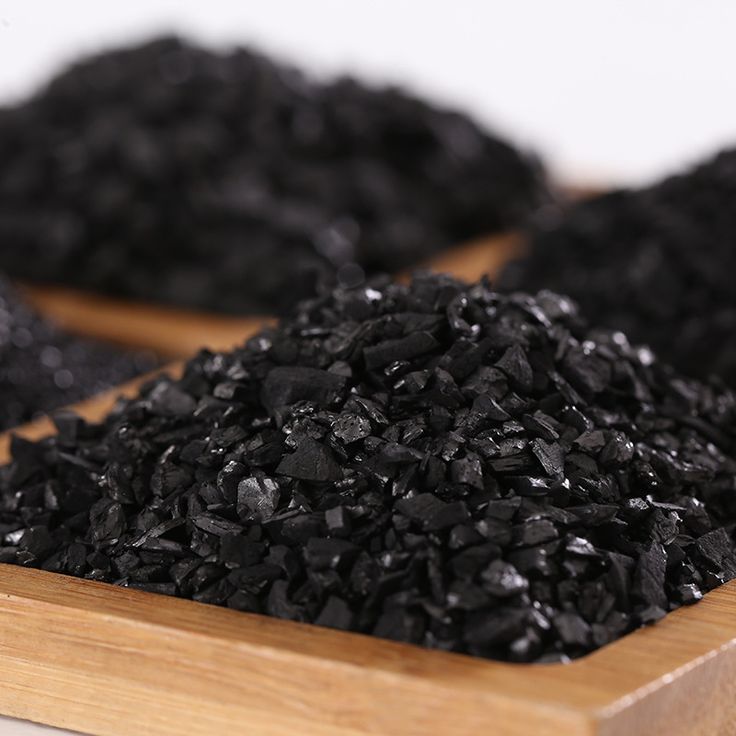
Granulated Activated Carbon for Water Treatment works primarily through adsorption, where selected dissolved contaminants move from water onto the internal surface of the carbon.
In a typical GAC filtration system, water enters a treatment vessel containing a packed bed of Activated Carbon granules.
As water passes through the carbon bed, contaminant molecules travel toward the carbon particles and diffuse into the internal pore network.
Suitable molecules are retained on the carbon surface, reducing their concentration in the treated water.
Chlorine reduction also involves chemical reactions at the carbon surface, so not every contaminant is removed through the same mechanism.
Important Stages of the Filtration Process
- Water Entry: Contaminated water enters the Activated Carbon filtration vessel.
- Contact: Water flows through the packed bed of Granulated Activated Carbon.
- Mass Transfer: Dissolved contaminants move toward the carbon surface.
- Pore Diffusion: Suitable molecules enter the internal pore structure.
- Adsorption: Contaminants are retained on the available carbon surface.
- Treated Water: Water leaves the filtration system with reduced concentrations of target contaminants.
The effectiveness of this process depends on carbon quality, pore structure, particle size, contaminant concentration, flow rate, contact time, bed depth, and water chemistry.
Major Uses of Granulated Activated Carbon in Water Treatment
Granulated Activated Carbon is widely used in water treatment applications because of its adsorption capability, mechanical strength, and suitability for continuous filtration systems.
| Water Treatment Application | Uses of Granulated Activated Carbon |
|---|---|
| Drinking Water Treatment | Chlorine reduction, taste and odor improvement, and adsorption of selected organic contaminants. |
Frequently Asked Questions - Granulated Activated Carbon for Water Treatment
Granulated Activated Carbon, commonly known as Granular Activated Carbon (GAC), is a highly porous filtration material used in water treatment systems. It helps reduce chlorine, unwanted taste and odor, selected dissolved organic contaminants, and other adsorbable impurities from drinking water, industrial process water, and wastewater.
Granulated Activated Carbon works mainly through adsorption. As water passes through the carbon bed, suitable contaminants move into the internal pore structure and attach to the carbon surface. Chlorine reduction also involves chemical reactions at the carbon surface. Performance depends on carbon quality, pore structure, flow rate, contact time, and water chemistry.
Granulated Activated Carbon supports chlorine reduction, taste and odor improvement, adsorption of selected organic contaminants, and continuous water filtration. Coconut Charcoal based Steam Activated Carbon also offers good hardness, developed microporosity, and mechanical durability for industrial water purification systems.
Granulated Activated Carbon is commonly used in drinking water treatment, municipal water purification, industrial process water, wastewater polishing, groundwater treatment, food and beverage process water, and selected RO pre-treatment applications. The correct carbon grade depends on the treatment requirements.
Important performance factors include iodine value, pore size distribution, particle size, hardness, ash content, apparent density, contaminant concentration, water chemistry, flow rate, filter-bed depth, and empty bed contact time. The most suitable carbon grade should be selected according to the actual water treatment conditions.
Select Granulated Activated Carbon based on the target contaminants, required water quality, carbon pore structure, particle size, iodine value, hardness, ash content, flow rate, contact time, and filtration system design. Laboratory testing and application trials can help confirm the appropriate grade for demanding water treatment processes.
Carbure Activated Carbon provides Coconut Charcoal based Steam Activated Carbon grades for different industrial water treatment requirements. Customers can enquire about suitable particle sizes, adsorption characteristics, hardness, ash content, technical specifications, bulk supply, and application-specific grade requirements.
Carbure Activated Carbon manufactures high-performance Steam Activated Carbon from premium Coconut Charcoal using superheated steam activation at 1000°C. Our Granular Activated Carbon solutions support drinking water treatment, industrial process water purification, wastewater polishing, chlorine reduction, taste and odor control, and selected organic contaminant adsorption.
Looking for Granulated Activated Carbon for Water Treatment?
Carbure Activated Carbon manufactures high-performance Granulated Activated Carbon from premium Coconut Charcoal using advanced steam activation technology. Our Granular Activated Carbon products are designed for drinking water treatment, municipal water purification, industrial process water, wastewater polishing, groundwater treatment, RO pre-treatment, chlorine reduction, taste and odor control, and selected organic contaminant adsorption.
Contact Carbure Activated Carbon for suitable Granulated Activated Carbon for Water Treatment grades, product specifications, technical support, bulk supply, and export enquiries.
