
Coconut Shell vs Coal Activated Carbon: Why More Industries Are Switching
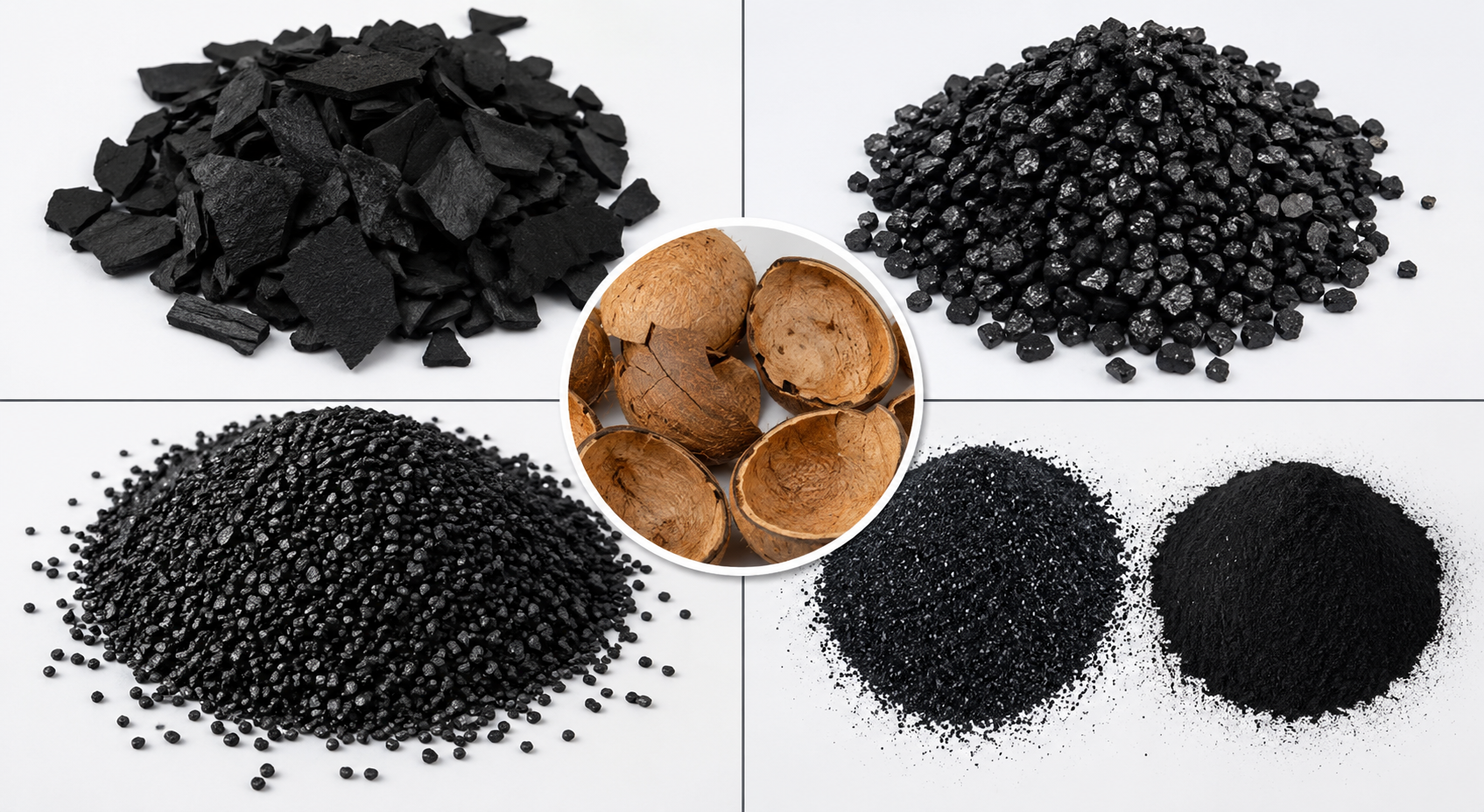
Coconut Shell vs Coal Activated Carbon
Coconut Shell Activated Carbon and Coal Activated Carbon are both widely used for purification, filtration, and adsorption applications. However, the performance of each carbon depends on its raw material, activation process, pore structure, hardness, ash content, and application requirement.
In recent years, more industries have started switching to Coconut Shell based Activated Carbon because of its high hardness, low ash content, excellent micropore structure, reduced dust formation, and strong adsorption efficiency.
At Carbure Activated Carbon, high-performance Steam Activated Carbon is manufactured from premium Coconut Charcoal using superheated steam at 1000°C. This process develops a highly porous structure suitable for water treatment, air purification, chemical processing, food purification, gold recovery, solvent recovery, and industrial filtration applications.
What is Coconut Shell Activated Carbon?
Coconut Shell Activated Carbon is produced from Coconut Charcoal through controlled steam activation. During activation, Coconut Charcoal faces superheated steam at 1000°C, creating millions of microscopic pores inside the carbon structure.
This advanced pore network gives Coconut Shell Activated Carbon strong adsorption capacity, especially for small organic molecules, chlorine, odors, VOCs, gases, and dissolved impurities.
Because of its natural hardness and low ash content, Coconut Shell based Activated Carbon is widely preferred in industries that require consistent quality, long service life, and reliable purification performance.
What is Coal Activated Carbon?
Coal Activated Carbon is produced from coal-based raw materials and is commonly used in water treatment, wastewater treatment, air purification, and industrial filtration systems.
Coal Activated Carbon generally offers a broader pore structure and is often selected for applications where larger molecules or mixed contaminants need to be adsorbed. It is also used in applications where cost efficiency is a major consideration.
However, compared to Coconut Shell Activated Carbon, coal-based carbon may have higher ash content and lower hardness depending on the raw material quality and manufacturing process.
Key Differences Between Coconut Shell and Coal Activated Carbon
- Raw Material: Coconut Shell Activated Carbon is made from Coconut Charcoal, while Coal Activated Carbon is made from coal-based raw material.
- Hardness: Coconut Shell Activated Carbon generally has higher hardness, reducing dust and media breakdown during operation.
- Ash Content: Coconut Shell based carbon usually offers lower ash content, making it suitable for high-purity applications.
- Pore Structure: Coconut Shell Activated Carbon has strong micropore development, while Coal Activated Carbon may provide broader pore distribution.
- Adsorption Performance: Coconut Shell carbon is highly effective for small organic molecules, chlorine, odor, VOCs, and gases.
- Service Life: Better hardness and pore development can support longer operational performance in many filtration systems.
Why More Industries Are Switching to Coconut Shell Activated Carbon
Industries are increasingly choosing Coconut Shell Activated Carbon because purification systems today demand higher efficiency, cleaner performance, better durability, and consistent quality. In water treatment and air purification systems, the carbon must perform under continuous operating conditions without excessive dust formation or rapid media breakdown.
Coconut Shell based Steam Activated Carbon offers excellent strength and adsorption efficiency, making it suitable for industries where performance and reliability are critical.
- Higher hardness and better mechanical strength
- Low dust generation during handling and operation
- Low ash content for cleaner purification performance
- Excellent micropore structure for strong adsorption
- Suitable for water treatment, air purification, and industrial filtration
- Reliable performance in continuous filtration systems
- Produced from renewable coconut shell-based Coconut Charcoal
Industrial Applications
Coconut Shell Activated Carbon is used across several industries because of its strong adsorption performance, purity, and durability.
Water Treatment
Used for chlorine removal, taste and odor control, organic impurity adsorption, drinking water polishing, process water treatment, and wastewater polishing.
Air Purification
Used for odor removal, VOC adsorption, gas purification, industrial exhaust treatment, HVAC filtration, and indoor air quality improvement.
Food and Beverage Purification
Used to improve process water quality and support purification requirements in food and beverage manufacturing.
Chemical Processing
Used for purification, decolorization, organic impurity removal, and solvent recovery support.
Gold Recovery
Used in gold recovery applications where hardness, adsorption capacity, and low attrition are important performance factors.
Quality Factors to Check Before Choosing Activated Carbon
Whether selecting Coconut Shell or Coal Activated Carbon, industries should evaluate the carbon based on technical performance and application suitability.
- Raw material source: Determines pore structure, hardness, ash level, and adsorption behavior.
- Iodine value: Indicates micropore volume and adsorption capacity.
- Hardness: Important for long service life and reduced dust generation.
- Ash content: Lower ash content supports cleaner purification performance.
- Particle size: Influences flow rate, pressure drop, and contact time.
- Moisture content: Affects handling, storage, and usable performance.
- Application requirement: The right grade must match the contaminant type and operating system.
Why Choose Carbure Activated Carbon?
Carbure Activated Carbon manufactures high-performance Steam Activated Carbon from premium Coconut Charcoal using advanced steam activation technology. During activation, Coconut Charcoal faces superheated steam at 1000°C, developing a strong and highly porous carbon structure.
Our Coconut Charcoal based Activated Carbon is engineered for water treatment, wastewater treatment, air purification, VOC control, chemical processing, food and beverage purification, gold recovery, solvent recovery, and industrial filtration applications.
With strict quality control, consistent adsorption performance, and global supply capability, Carbure Activated Carbon delivers reliable Activated Carbon solutions for industries that demand performance, purity, and long-term reliability.
Coconut Shell vs Coal Activated Carbon - Final Thoughts
Both Coconut Shell Activated Carbon and Coal Activated Carbon have their place in industrial purification. However, more industries are switching to Coconut Shell based Steam Activated Carbon because it offers high hardness, low ash content, strong micropore development, reduced dust generation, and reliable adsorption performance.
For industries focused on water treatment, air purification, food processing, chemical purification, and environmental filtration, Coconut Shell Activated Carbon provides a strong balance of purity, efficiency, and durability.
Carbure Activated Carbon continues to support industries with high-performance Coconut Charcoal based Steam Activated Carbon designed for demanding purification applications.
FAQs
Coconut Shell Activated Carbon is made from Coconut Charcoal and is known for high hardness, low ash content, and strong micropore development. Coal Activated Carbon is made from coal-based raw material and generally has broader pore distribution.
Industries are switching because Coconut Shell Activated Carbon offers higher hardness, lower ash content, reduced dust generation, strong adsorption capacity, and reliable purification performance.
Yes. Coconut Shell based Steam Activated Carbon is widely preferred for water treatment because of its excellent micropore structure, strong adsorption capacity, low ash content, and durability.
Yes. Coal Activated Carbon is still used in several industrial applications, especially where broader pore distribution and cost efficiency are required.
Looking for Coconut Shell Activated Carbon?
Carbure Activated Carbon manufactures high-performance Steam Activated Carbon from Coconut Charcoal using superheated steam activation at 1000°C. Our products are designed for water treatment, air purification, VOC removal, odor control, chemical purification, food processing, gold recovery, and industrial filtration applications.
Contact Carbure Activated Carbon today for custom grades, bulk supply, and technical support.
