
Charcoal Coconut Shell: Premium Raw Material for High-Performance Activated Carbon
Introduction to Charcoal Coconut Shell
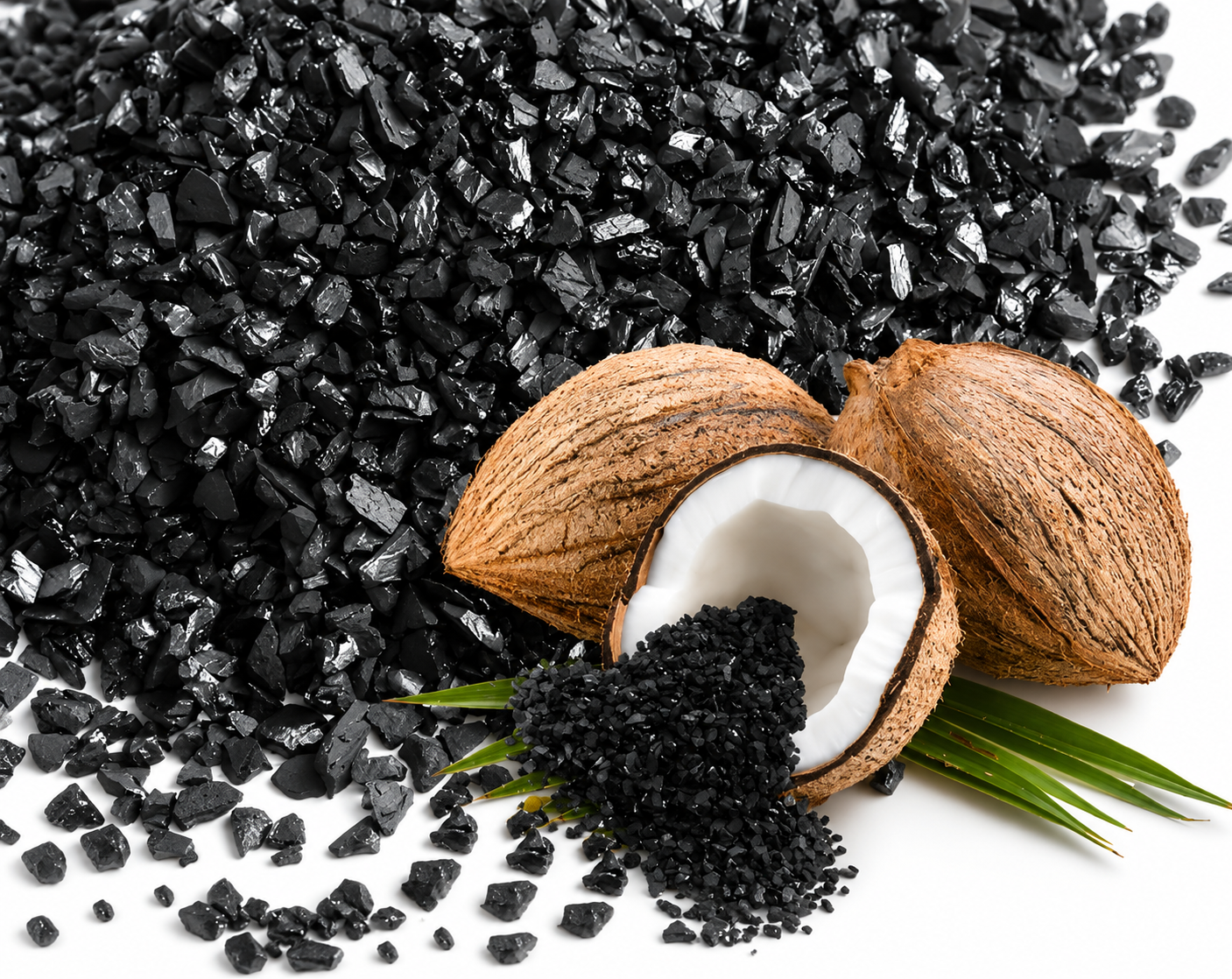
Charcoal Coconut Shell, commonly known as Coconut Charcoal, is a high-quality carbon-rich material produced by carbonizing carefully selected coconut shells under controlled conditions. It is widely used as a premium raw material for manufacturing Steam Activated Carbon because of its natural hardness, high carbon content, low ash level, and excellent pore development capability.
The dense structure of coconut shells allows Coconut Charcoal to develop a strong microporous network during activation. This makes it highly suitable for removing chlorine, odors, volatile organic compounds, dissolved organic contaminants, gases, chemicals, and other impurities from water, air, and industrial process streams.
Leading Activated Carbon Manufacturers prefer Coconut Charcoal because it produces Activated Carbon with excellent mechanical strength, consistent adsorption efficiency, low dust generation, and reliable service life.
Carbure Activated Carbon manufactures premium Coconut Charcoal-based Steam Activated Carbon for water treatment, air purification, gold recovery, chemical processing, food and beverage purification, solvent recovery, and environmental filtration applications.
What is Charcoal Coconut Shell?
Charcoal Coconut Shell is produced when cleaned and dried coconut shells undergo controlled carbonization in a limited-oxygen environment. During this process, moisture and volatile compounds are removed while the carbon-rich structure of the coconut shell is preserved.
The resulting material is known as Coconut Charcoal. It is hard, dense, porous, and capable of withstanding the high temperatures required during the steam activation process.
Unlike ordinary fuel charcoal, Coconut Charcoal used by professional Activated Carbon Manufacturers must meet strict requirements for carbon content, ash, moisture, hardness, volatile matter, particle size, and consistency.
The quality of the Coconut Charcoal directly influences the final Activated Carbon’s pore structure, adsorption capacity, purity, mechanical strength, and application performance.
How Charcoal Coconut Shell is Produced
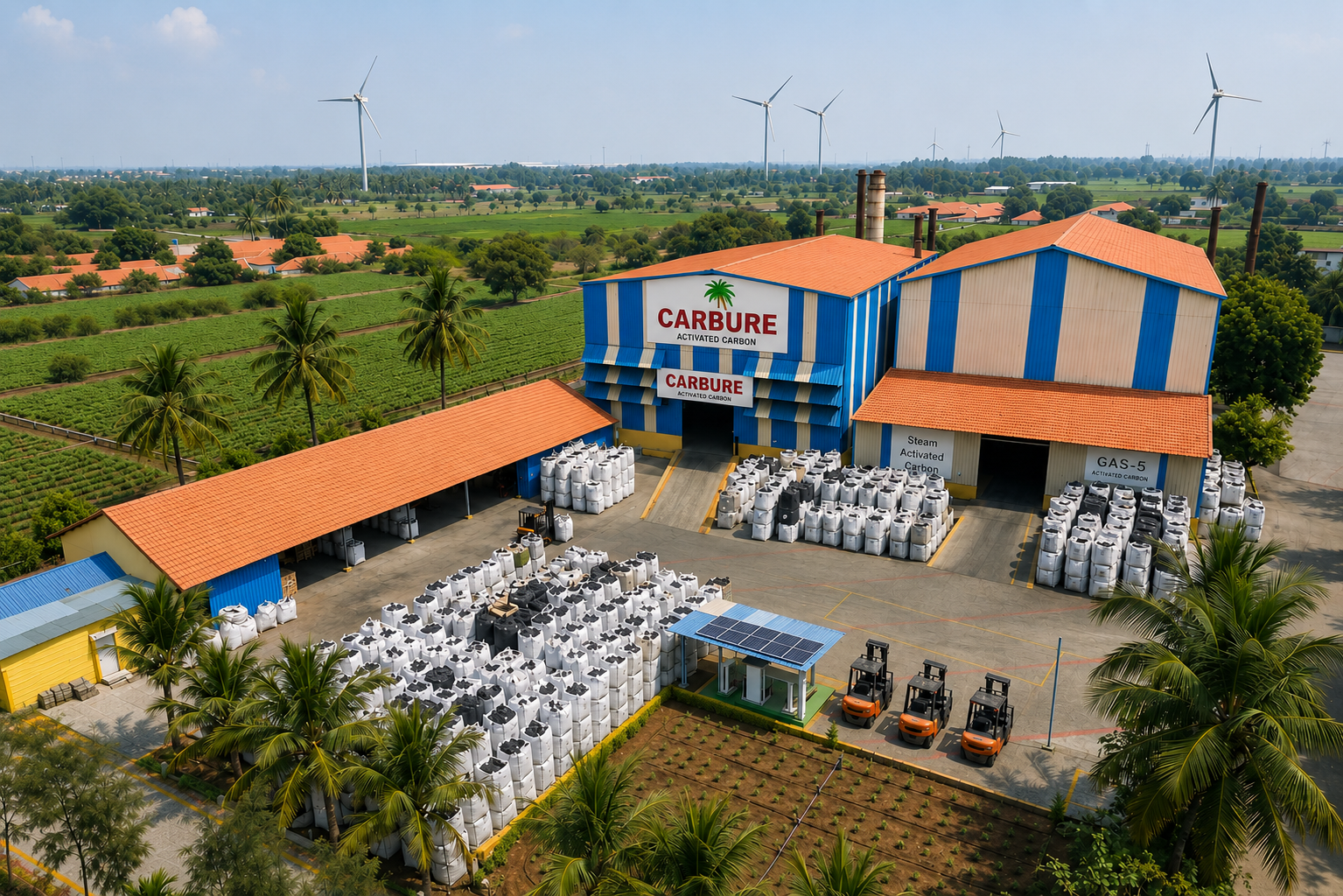
The production of quality Coconut Charcoal begins with the careful selection of mature coconut shells. The shells are cleaned to remove fibres, soil, foreign matter, and other impurities that could affect the carbonization process.
1. Selection of Coconut Shells
Strong and mature coconut shells are selected because they have a dense natural structure and high fixed-carbon potential. Consistent raw material selection helps produce Coconut Charcoal with stable quality.
2. Cleaning and Drying
The coconut shells are cleaned and dried to reduce moisture. Controlled moisture improves carbonization efficiency and helps produce uniform Coconut Charcoal.
3. Controlled Carbonization
The dried shells are heated under limited oxygen conditions. During carbonization, volatile substances are released, and the coconut shells are converted into carbon-rich Coconut Charcoal.
4. Cooling and Stabilization
The Coconut Charcoal is carefully cooled to prevent unwanted combustion. Proper cooling preserves the carbon structure and supports safe handling.
5. Crushing and Screening
The Coconut Charcoal is crushed and screened into suitable particle sizes according to the requirements of the activation system and final product specification.
6. Quality Inspection
The material is checked for ash, moisture, fixed carbon, hardness, volatile matter, foreign contamination, and particle size before being approved for Activated Carbon production.
Important Properties of Charcoal Coconut Shell
The performance of Coconut Charcoal depends on its physical and chemical properties. High-quality material provides a stable foundation for producing efficient Activated Carbon.
- High fixed-carbon content: Supports effective activation and strong pore development.
- Natural hardness: Helps produce durable Activated Carbon with reduced breakage and dust generation.
- Low ash content: Supports cleaner performance and reduces unwanted mineral impurities.
- Dense structure: Allows the development of a strong microporous network during steam activation.
- Controlled moisture: Supports consistent processing, storage, and activation efficiency.
- Low volatile matter: Indicates effective carbonization and stable Coconut Charcoal quality.
- Uniform particle size: Supports controlled activation and consistent final product performance.
- Renewable raw material: Coconut shells are an agricultural by-product and a sustainable carbon source.
Charcoal Coconut Shell for Activated Carbon Manufacturing
Charcoal Coconut Shell is widely preferred by Activated Carbon Manufacturers because its dense carbon structure develops high adsorption capacity during steam activation.
At Carbure Activated Carbon, carefully selected Coconut Charcoal faces superheated steam at 1000°C. The interaction between the Coconut Charcoal and superheated steam removes controlled portions of carbon and develops millions of interconnected pores.
This process transforms Coconut Charcoal into high-performance Steam Activated Carbon with an extensive internal surface area. The resulting pore network can capture and retain contaminants from water, air, gases, liquids, and industrial process streams.
The pore structure developed from Coconut Charcoal is predominantly microporous. This makes Coconut Shell Activated Carbon particularly effective for adsorbing smaller molecules such as chlorine, odors, VOCs, dissolved organic compounds, gases, and selected chemical contaminants.
Key Benefits of Charcoal Coconut Shell
Charcoal Coconut Shell provides several advantages when used as the base material for manufacturing Activated Carbon.
- Produces Activated Carbon with excellent mechanical hardness
- Supports strong micropore development during activation
- Offers high adsorption efficiency for smaller contaminants
- Helps reduce carbon breakage and fines generation
- Provides lower ash content compared with many mineral-based raw materials
- Supports consistent performance in fixed-bed filtration systems
- Suitable for regeneration and repeated operating cycles in selected applications
- Helps produce clean Activated Carbon for high-purity applications
- Derived from renewable coconut shell-based agricultural material
- Suitable for water, air, gas, liquid, chemical, and gold recovery applications
Industrial Applications of Coconut Charcoal-Based Activated Carbon
Coconut Charcoal is converted into Steam Activated Carbon for use across industries that require dependable adsorption, purification, contaminant removal, and process protection.
Water Treatment
Coconut Charcoal-based Activated Carbon is used for chlorine removal, odor control, taste improvement, organic contaminant adsorption, drinking water purification, process water treatment, wastewater polishing, ETP, STP, and RO pre-treatment.
Air and Gas Purification
It is used to remove odors, VOCs, solvent vapours, gases, fumes, and airborne contaminants from industrial exhaust systems, HVAC filters, air purifiers, gas treatment units, and ventilation systems.
Gold Recovery
Hard Coconut Charcoal-based Activated Carbon is widely used in CIP, CIL, and CIC gold recovery systems because of its adsorption capacity, mechanical strength, low attrition, and resistance to repeated processing cycles.
Food and Beverage Processing
It supports water purification, ingredient purification, contaminant removal, process improvement, and selected decolorization requirements in food and beverage manufacturing.
Chemical and Pharmaceutical Processing
Coconut Charcoal-based Activated Carbon is used for chemical purification, organic impurity removal, solvent recovery, process stream polishing, gas treatment, and pharmaceutical filtration.
Environmental Protection
It is used in odor control, emission treatment, wastewater purification, VOC reduction, industrial gas filtration, and pollution control systems.
Why Activated Carbon Manufacturers Prefer Charcoal Coconut Shell
Professional Activated Carbon Manufacturers select their raw material according to the pore structure, purity, hardness, adsorption performance, and final application required.
Charcoal Coconut Shell is preferred for manufacturing high-quality Activated Carbon because it provides a dense and mechanically strong carbon structure. During controlled steam activation, this structure develops a large volume of micropores without losing its physical durability.
This combination of hardness and microporosity allows Activated Carbon Manufacturers to produce grades with high iodine value, controlled CTC activity, low ash, reduced dust, stable apparent density, and dependable particle strength.
For applications such as drinking water purification, air treatment, gold recovery, food processing, gas purification, and solvent recovery, Coconut Charcoal provides an effective balance of adsorption capacity, purity, durability, and operational reliability.
Experienced Activated Carbon Manufacturers also evaluate the consistency of the Coconut Charcoal supply. Variations in ash, carbon content, moisture, carbonization, and particle size can directly affect activation efficiency and final product performance.
Quality Parameters of Charcoal Coconut Shell
Before Coconut Charcoal is used for Activated Carbon manufacturing, several important quality parameters must be evaluated.
- Fixed carbon: Higher fixed-carbon content supports efficient activation and stable carbon yield.
- Ash content: Low ash helps maintain product purity and reduces mineral contamination.
- Moisture content: Controlled moisture supports proper storage, handling, and processing.
- Volatile matter: Indicates the completeness and consistency of the carbonization process.
- Hardness: Strong Coconut Charcoal supports the production of durable Activated Carbon.
- Particle size: Uniform sizing helps maintain controlled activation and consistent heat transfer.
- Foreign matter: Coconut Charcoal should be free from stones, soil, metal, fibres, and other contaminants.
- Bulk density: Influences handling, activation capacity, storage, packing, and final product characteristics.
- Carbonization quality: Uniformly carbonized material supports consistent pore development.
Why Choose Carbure Activated Carbon?
Carbure Activated Carbon is among the trusted Activated Carbon Manufacturers supplying high-performance Coconut Charcoal-based Steam Activated Carbon for industrial purification applications.
Our manufacturing process begins with carefully selected Coconut Charcoal. During activation, the Coconut Charcoal faces superheated steam at 1000°C, producing a highly porous Activated Carbon structure with excellent adsorption performance.
Every grade is developed by considering iodine value, CTC activity, hardness, ash, moisture, apparent density, particle size, pH, pressure drop, contact time, and application requirements.
Carbure Activated Carbon supplies Granular Activated Carbon, Powdered Activated Carbon, Pelletized Activated Carbon, Acid Washed Activated Carbon, Impregnated Activated Carbon, and specialized Gold Grade Activated Carbon.
- Premium Coconut Charcoal raw material
- Controlled steam activation technology
- Superheated steam activation at 1000°C
- Consistent pore structure and adsorption performance
- High hardness and reduced carbon loss
- Low ash and controlled moisture
- Customized mesh sizes and product specifications
- Application-based technical support
- Bulk manufacturing and export supply capability
- Reliable Activated Carbon solutions for global industries
Charcoal Coconut Shell – Final Thoughts
Charcoal Coconut Shell is more than a carbonized agricultural material. It is a premium raw material that determines the strength, purity, pore structure, adsorption efficiency, and service life of Coconut Shell Activated Carbon.
Its high fixed-carbon content, low ash, natural hardness, dense structure, and strong micropore development make it a preferred choice for leading Activated Carbon Manufacturers.
When Coconut Charcoal faces superheated steam at 1000°C under controlled conditions, it is transformed into high-performance Steam Activated Carbon suitable for water purification, air treatment, gold recovery, chemical processing, food purification, gas filtration, and environmental applications.
Carbure Activated Carbon combines premium Coconut Charcoal, advanced activation technology, strict quality control, and application-specific product development to deliver reliable Activated Carbon solutions for industries worldwide.
Frequently Asked Questions
Charcoal Coconut Shell, also known as Coconut Charcoal, is a carbon-rich material produced by carbonizing coconut shells under controlled and limited-oxygen conditions.
Yes. Charcoal Coconut Shell is a premium raw material used to manufacture Coconut Shell Activated Carbon because of its hardness, low ash, high fixed-carbon content, and excellent micropore development.
Coconut Charcoal faces superheated steam at 1000°C under controlled conditions. This develops millions of internal pores and transforms it into high-performance Steam Activated Carbon.
Activated Carbon Manufacturers prefer Coconut Charcoal because it produces hard, low-ash, highly microporous Activated Carbon with strong adsorption performance and reduced dust generation.
Important properties include high fixed carbon, low ash, controlled moisture, low volatile matter, strong hardness, uniform particle size, and freedom from foreign contamination.
It is used in drinking water treatment, wastewater purification, air treatment, gas purification, gold recovery, food processing, pharmaceuticals, chemical purification, VOC removal, and solvent recovery.
Yes. Carbure Activated Carbon manufactures Coconut Charcoal-based Steam Activated Carbon in customized grades for water, air, gas, liquid, chemical, gold recovery, and industrial purification applications.
Looking for Coconut Charcoal-Based Activated Carbon?
Carbure Activated Carbon manufactures premium Steam Activated Carbon from carefully selected Coconut Charcoal. Our products are engineered for high adsorption efficiency, strong hardness, low ash, consistent pore structure, and reliable industrial performance.
Contact Carbure Activated Carbon for customized grades, bulk supply, export requirements, application support, and dependable Activated Carbon solutions.
