
Carbon Impregnated: Advanced Adsorption for Targeted Industrial Purification
Introduction
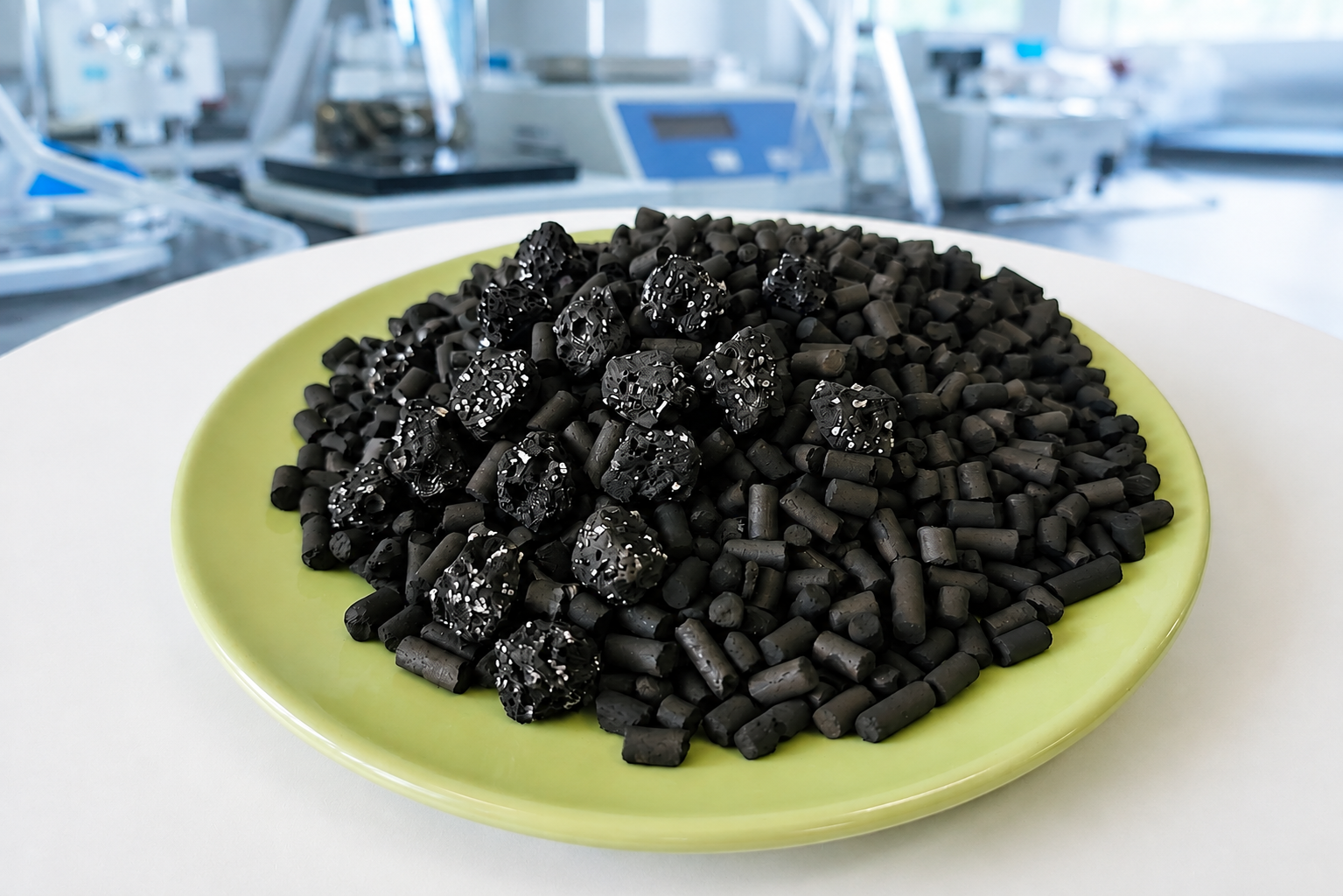
Carbon Impregnated is a specialized form of Activated Carbon treated with selected chemical reagents to improve the removal of specific gases, vapours, odors, and industrial contaminants. While standard Activated Carbon mainly works through physical adsorption, Carbon Impregnated products combine adsorption with chemical reaction, neutralization, or catalytic conversion.
This enhanced surface chemistry makes Carbon Impregnated highly effective for removing acid gases, alkaline gases, ammonia, hydrogen sulphide, mercury vapour, formaldehyde, sulphur compounds, chlorine, and other difficult contaminants from air and gas streams.
Carbure Activated Carbon manufactures high-performance Carbon Impregnated grades using carefully selected base Activated Carbon and controlled impregnation processes to deliver dependable purification performance for critical industrial applications.
What is Carbon Impregnated?
Carbon Impregnated refers to Activated Carbon treated with selected chemical agents that improve its ability to adsorb, neutralize, or chemically react with specific contaminants.
The impregnation process modifies the surface chemistry of the carbon while retaining access to the internal pore network. This enables the carbon to capture contaminants that may be weakly adsorbed by untreated Activated Carbon.
Depending on the application, Carbon Impregnated can be prepared using potassium iodide, potassium hydroxide, sodium carbonate, potassium carbonate, phosphoric acid, nickel chloride, copper oxide, sulphur, iodine, silver, TEDA, and other selected reagents.
This makes Carbon Impregnated a preferred solution for air purification, gas treatment, industrial exhaust filtration, odor control, military filtration, mercury removal, chemical processing, and environmental protection systems.
Carbon Impregnated Manufacturing Process
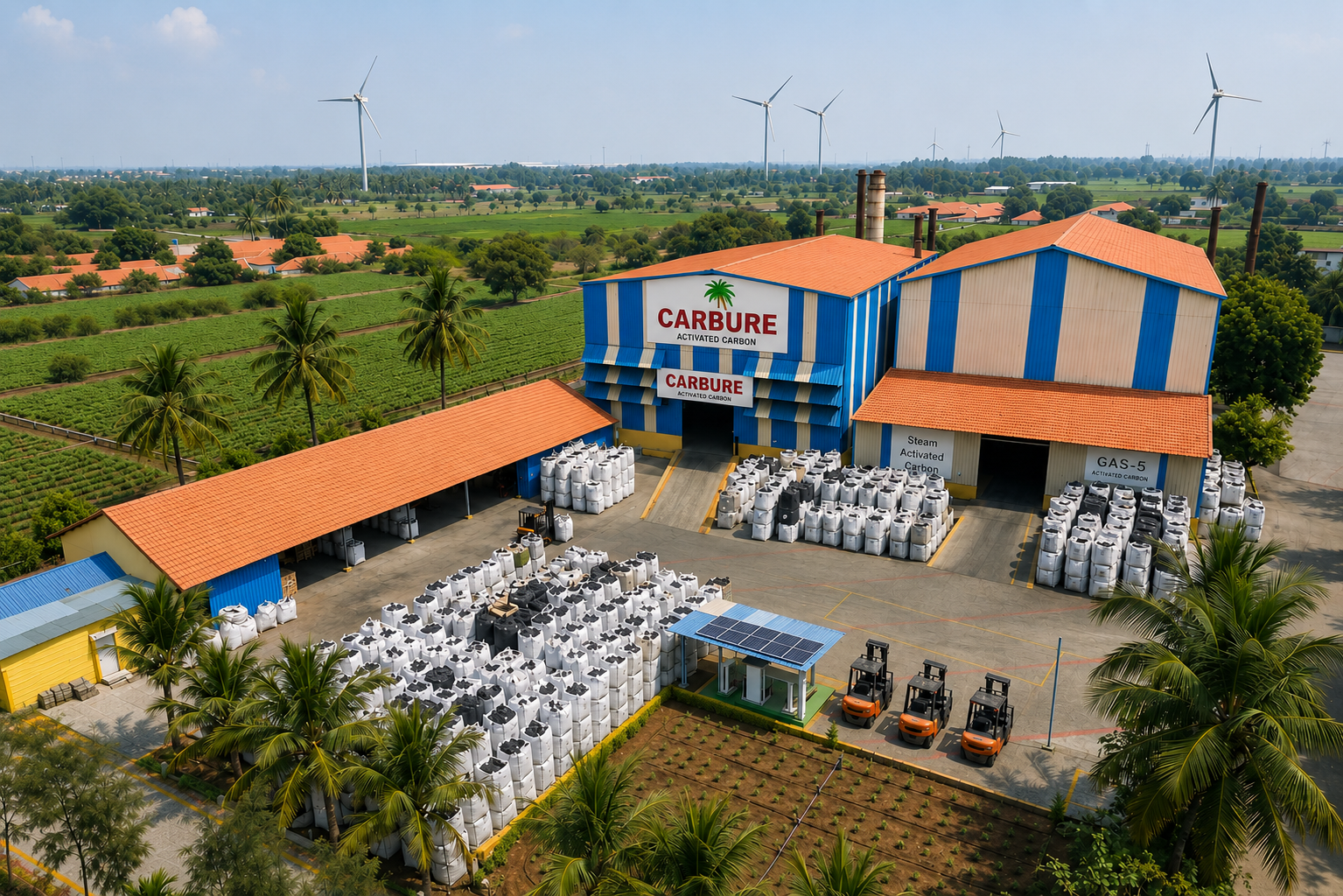
The manufacturing process begins with high-quality Activated Carbon selected according to pore structure, hardness, adsorption capacity, surface area, particle size, ash content, and application requirements.
The base carbon may be produced from premium Coconut Charcoal using advanced steam activation technology. During activation, Coconut Charcoal faces superheated steam at 1000°C, developing a highly porous structure suitable for further impregnation.
After activation, selected chemical reagents are introduced into the pore structure and surface of the carbon under carefully controlled conditions. The impregnation level must be accurately maintained to ensure effective chemical loading without blocking access to the adsorption pores.
The Carbon Impregnated material is then dried, stabilized, screened, and tested to verify uniform reagent distribution, moisture content, adsorption performance, particle size, and contaminant removal efficiency.
Through this controlled process, standard Activated Carbon is transformed into specialized Carbon Impregnated products for targeted industrial purification applications.
Available Carbon Impregnated Grades
Carbure Activated Carbon offers a wide range of Carbon Impregnated grades developed for specific contaminant removal requirements.
- KI, KOH, Na₂CO₃ and K₂CO₃ impregnated grades: Used for acid gas and selected contaminant removal.
- H₃PO₄ and NiCl₂ impregnated grades: Used for ammonia and alkaline gas removal.
- CuO impregnated grades: Used for acid gas removal in inert or controlled atmospheres.
- Cu-Cr-Ag-TEDA impregnated grades: Used for military, respirator, and specialized gas filtration applications.
- Sulphur and iodine impregnated grades: Used for mercury vapour removal.
- Tris-Amino impregnated grades: Used for formaldehyde removal.
- Customized impregnated grades: Developed according to the target contaminant and operating conditions.
Key Benefits of Carbon Impregnated
Carbon Impregnated provides improved purification performance where specific gases and chemical contaminants require targeted adsorption, neutralization, or catalytic reaction.
The combination of a highly porous carbon structure and selected chemical reagents helps improve contaminant removal efficiency, filter performance, and operational reliability in critical purification systems.
- Improved removal of specific gases and vapours
- Enhanced odor control performance
- Effective removal of acid and alkaline gases
- Suitable for ammonia and hydrogen sulphide control
- Effective mercury vapour adsorption
- Supports formaldehyde and chemical vapour removal
- Reliable performance in industrial air and gas purification
- Suitable for respirators and military filtration systems
- Customized reagent loading based on application requirements
- Improved filter efficiency and service life
Industrial Applications of Carbon Impregnated
Carbon Impregnated is widely used in industries where targeted contaminant removal is essential for worker safety, process efficiency, product quality, equipment protection, and environmental compliance.
Air and Gas Purification
Used for removing acid gases, ammonia, hydrogen sulphide, sulphur compounds, chlorine, formaldehyde, mercury vapour, and other hazardous contaminants from air and gas streams.
Industrial Exhaust Treatment
Used in industrial ventilation, exhaust filtration, emission control, chemical plants, manufacturing facilities, and odor treatment systems.
Respirators and Gas Masks
Specialized Carbon Impregnated grades are used in respirators, gas masks, protective filters, and military filtration applications where targeted gas removal is required.
Biogas Purification
Used to remove hydrogen sulphide and selected contaminants from biogas streams before further processing or energy utilization.
Mercury Removal
Sulphur- or iodine-impregnated Activated Carbon is used to capture mercury vapour from industrial gas streams and specialized purification systems.
Formaldehyde and Odor Control
Special impregnated grades support the removal of formaldehyde, chemical odors, and difficult gaseous contaminants from indoor and industrial air systems.
Water and Chemical Processing
Carbon Impregnated may also be used in selected water treatment and chemical purification processes where targeted chemical interaction is necessary.
Carbure Activated Carbon supplies Carbon Impregnated solutions designed to meet the needs of industries requiring dependable adsorption performance, customized reagent loading, and application-specific purification support.
High-Performance Carbon Impregnated from Carbure
Carbure Activated Carbon manufactures Carbon Impregnated products for advanced industrial purification applications. Our grades are engineered for gas purification, odor control, air treatment, mercury removal, ammonia control, acid gas removal, formaldehyde removal, and specialized chemical filtration.
With controlled impregnation technology, carefully selected base carbon, uniform reagent distribution, consistent quality testing, and reliable supply capability, Carbure Activated Carbon delivers customized purification solutions for demanding industrial applications worldwide.
Product specifications can be developed based on target contaminant, reagent type, impregnation level, particle size, moisture, adsorption capacity, operating temperature, humidity, flow rate, and expected service life.
Frequently Asked Questions - Carbon Impregnated
Carbon Impregnated is Activated Carbon treated with selected chemical reagents to improve the adsorption, neutralization, or chemical conversion of specific gases, vapours, odors, and industrial contaminants.
Carbon Impregnated combines the physical adsorption capacity of Activated Carbon with chemical reaction, neutralization, or catalytic action provided by the impregnating reagent.
It provides enhanced removal of targeted gases that may not be strongly adsorbed by untreated Activated Carbon, including ammonia, acid gases, hydrogen sulphide, formaldehyde, and mercury vapour.
Carbon Impregnated is used in air purification, industrial exhaust treatment, gas masks, respirators, military filters, biogas purification, odor control, mercury removal, and chemical processing systems.
Common impregnation agents include potassium iodide, potassium hydroxide, sodium carbonate, potassium carbonate, phosphoric acid, nickel chloride, copper oxide, sulphur, iodine, silver, TEDA, and selected amino compounds.
Yes. Carbure Activated Carbon supplies customized Carbon Impregnated grades based on the target contaminant, reagent requirement, particle size, operating conditions, and expected purification performance.
