
Activated Carbon Powder: What Is the Science Behind the Powdered Carbon?
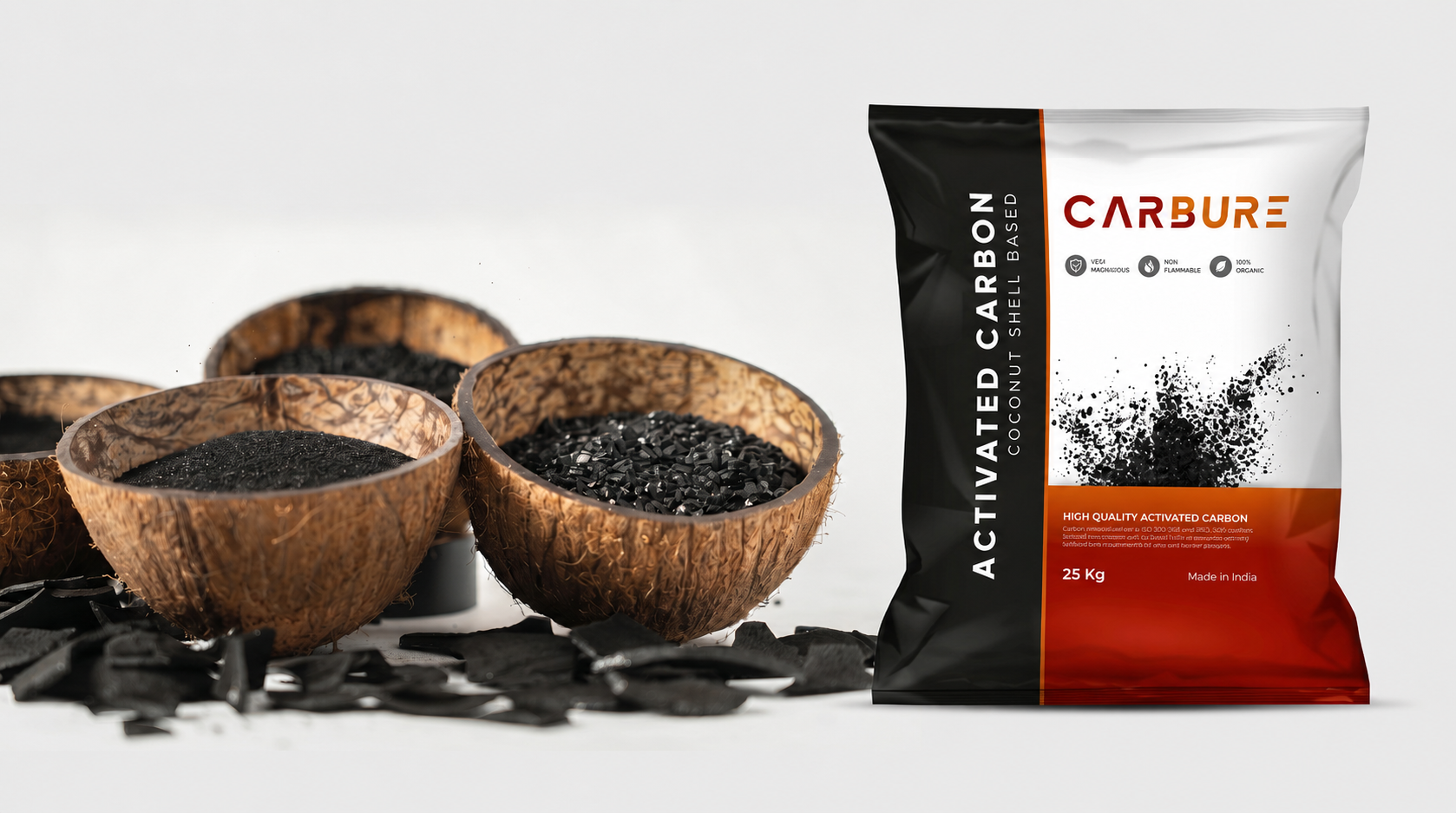
What is the Science Behind Activated Carbon Powder?
Activated Carbon Powder is a highly porous carbon material engineered to remove impurities, contaminants, odors, colors, and dissolved organic compounds from liquids and gases. The science behind powdered activated carbon lies in its massive internal surface area and advanced pore structure.
Manufactured from Coconut Charcoal and activated using superheated steam at 1000°C, Powdered Activated Carbon develops millions of microscopic pores that create an enormous adsorption surface area ranging from 600–2000 m²/g.
This highly porous structure enables the carbon to efficiently capture and hold impurities, organic molecules, odors, colors, and dissolved contaminants from liquids and gases. The adsorption process takes place within the internal pore network, where contaminants are attracted and retained on the carbon surface.
The effectiveness of Powdered Activated Carbon depends on factors such as pore size distribution, particle size, surface chemistry, and activation quality. A well-developed pore structure improves adsorption speed, purification efficiency, and overall operational performance across industrial applications.
Carbure Activated Carbon manufactures high-performance Steam Activated Carbon solutions engineered for demanding industries including water treatment, gold recovery, food processing, chemical purification, pharmaceutical filtration, and air purification systems.
Pore Structure and Adsorption
Micropores
Micropores are extremely small pores responsible for capturing tiny contaminant molecules. These pores contribute heavily to adsorption capacity and are critical for purification efficiency.
Due to their ultra-fine structure, micropores provide a massive internal surface area where adsorption takes place efficiently. They are especially effective in removing dissolved organic compounds, odors, volatile substances, and low-molecular-weight impurities from liquids and gases.
In Powdered Activated Carbon, the concentration and distribution of micropores directly influence the adsorption performance. A higher micropore volume generally results in improved contaminant removal and enhanced purification capability.
Carbure Activated Carbon develops advanced microporous structures using superheated steam activation technology, ensuring consistent adsorption efficiency for industrial purification applications.
Mesopores & Macropores
Mesopores and macropores improve the transport of impurities into the internal structure of the carbon. They support faster diffusion and improve overall adsorption performance.
Mesopores act as intermediate channels that allow contaminants to move deeper into the carbon structure, where adsorption occurs within the micropores. This improves the accessibility of active adsorption sites and enhances purification efficiency.
Macropores function as larger transport pathways that help liquids and gases flow more efficiently through the carbon particle. These pores reduce resistance and enable quicker movement of contaminants during the adsorption process.
The balanced combination of micropores, mesopores, and macropores creates an optimized pore network that improves adsorption speed, contaminant capture, and operational performance across industrial applications.
Carbure Activated Carbon engineers advanced pore structures through superheated steam activation technology to deliver reliable purification performance for water treatment, air purification, chemical processing, and industrial filtration systems.
How Steam Activation Works
Carbonization Process
Raw Coconut Charcoal undergoes controlled heating to reduce volatile compounds and create a carbon-rich structure suitable for activation.
The material is then exposed to superheated steam at 1000°C, which develops an extensive network of micropores, mesopores, and macropores.
During the steam activation process, controlled oxidation expands the internal pore structure and significantly increases the available adsorption surface area. This transformation converts ordinary carbon material into highly efficient Steam Activated Carbon capable of capturing a wide range of contaminants.
The development of the pore network plays a critical role in determining adsorption performance, contaminant removal efficiency, and operational stability. Proper activation ensures the carbon achieves the ideal balance between adsorption capacity and diffusion speed.
Steam activation also improves the purity and consistency of the carbon, making it suitable for demanding industrial applications including water treatment, air purification, chemical processing, food and beverage purification, pharmaceutical filtration, and gold recovery systems.
Carbure Activated Carbon utilizes advanced steam activation technology and strict quality control processes to manufacture high-performance Activated Carbon Powder engineered for industrial purification and global applications.
Activation Results
- High adsorption capacity
- Large internal surface area
- Advanced pore development
- Efficient contaminant removal
- Consistent purification performance
- Improved adsorption efficiency
- Reliable industrial purification performance
- Enhanced contaminant diffusion and capture
Why Powdered Activated Carbon Performs Efficiently
- Micropores: Capture small molecules and dissolved contaminants.
- Mesopores: Improve transport of impurities into the carbon structure.
- Macropores: Enable faster flow and diffusion during purification.
- Massive Surface Area: Provides more active adsorption sites.
- Steam Activation Technology: Enhances adsorption efficiency and stability.
Industrial Applications of Activated Carbon Powder
Water & Effluent Treatment
- Color removal
- Odor reduction
- Organic contaminant adsorption
- Industrial wastewater purification
Industrial Processing
- Gold recovery
- Food and beverage purification
- Chemical filtration
- Air and gas purification
FAQs
Carbure Activated Carbon explains that Activated Carbon Powder achieves high adsorption capacity because of its highly developed pore structure and massive internal surface area created during steam activation.
Carbure Activated Carbon uses high-quality Coconut Charcoal due to its superior hardness, excellent pore structure, and high adsorption efficiency for industrial purification applications.
Carbure Activated Carbon utilizes superheated steam activation at 1000°C to develop the pore network inside the carbon, significantly improving adsorption performance and purification efficiency.
Carbure Activated Carbon removes impurities through the adsorption process, where contaminants, odor molecules, colors, and dissolved organic compounds attach to the highly porous surface of the Powdered Activated Carbon.
Carbure Activated Carbon products are widely used in industries such as water treatment, gold recovery, food and beverage purification, pharmaceuticals, chemical processing, air purification, and industrial effluent treatment.
