
Activated Carbon or Activated Charcoal
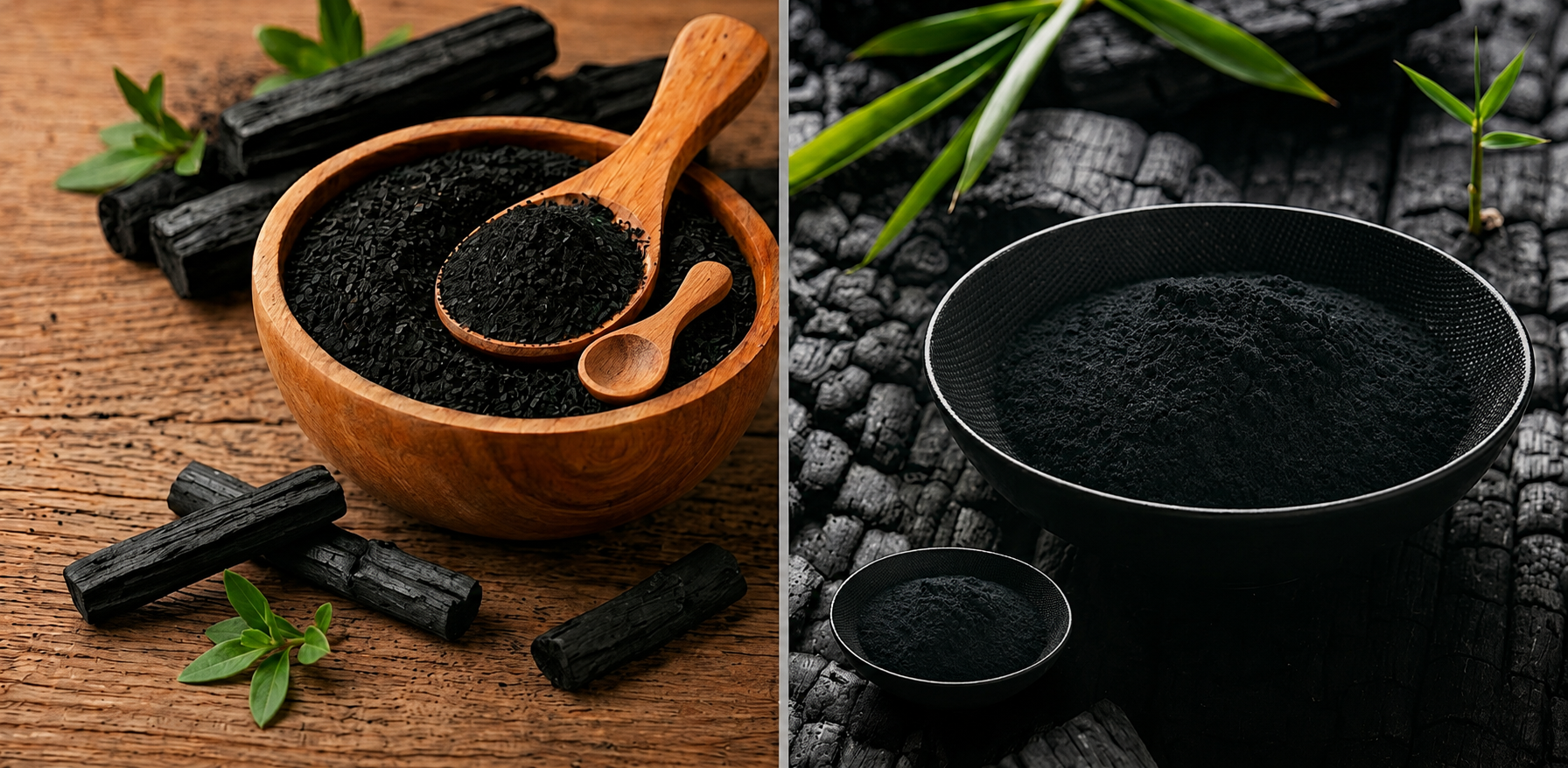
Activated Carbon or Activated Charcoal: What Is the Difference?
Activated Carbon and Activated Charcoal are often used interchangeably in industrial and commercial applications. In most cases, both terms refer to highly porous carbon materials engineered for adsorption and purification processes.
The term “Activated Carbon” is more commonly used in industrial sectors such as water treatment, air purification, gold recovery, chemical processing, and environmental filtration systems. “Activated Charcoal” is more frequently used in consumer products, healthcare, cosmetics, and household filtration applications.
Both materials are manufactured through controlled activation processes that create an extensive pore structure capable of trapping impurities, odors, gases, organic compounds, and contaminants from liquids and air streams.
Carbure Activated Carbon manufactures high-performance Steam Activated Carbon solutions from Coconut Charcoal using superheated steam activation at 1000°C for demanding industrial purification applications worldwide.
Role in Water Treatment
Activated Carbon plays a critical role in water treatment systems across the United States by removing dissolved organic compounds, chlorine, odor-causing substances, pesticides, industrial contaminants, and color impurities.
Its highly porous structure enables efficient adsorption of contaminants while improving water clarity, taste, and overall purification performance. Powdered Activated Carbon (PAC) and Granular Activated Carbon (GAC) are widely used in municipal water treatment plants, industrial effluent systems, and commercial filtration units.
Carbure Activated Carbon provides advanced Steam Activated Carbon solutions engineered for high adsorption efficiency and consistent purification performance in demanding water treatment applications.
Role in Air Purification
Activated Carbon is extensively used in air purification systems to capture volatile organic compounds (VOCs), industrial gases, smoke particles, odors, and airborne contaminants.
The extensive pore network within the carbon structure allows efficient adsorption of gas molecules, making it ideal for industrial air filtration, HVAC systems, chemical plants, solvent recovery units, and indoor air quality improvement systems.
In US industrial applications, Activated Carbon is widely preferred for environmental compliance, odor control, and emission reduction systems due to its reliable adsorption performance and operational stability.
How Steam Activation Improves Performance
Steam activation is a critical process that transforms Coconut Charcoal into highly porous Steam Activated Carbon. During activation, the carbon material is exposed to superheated steam at 1000°C, which develops millions of micropores, mesopores, and macropores within the structure.
This advanced pore development significantly increases the internal surface area, enabling the carbon to efficiently adsorb contaminants from water and air streams. The pore structure directly influences adsorption speed, contaminant capture efficiency, and operational performance.
Carbure Activated Carbon utilizes advanced steam activation technology and strict quality control processes to deliver consistent industrial purification solutions for global applications.
Our Steam Activated Carbon solutions are widely used across industries in the United States for water treatment, industrial wastewater purification, air and gas filtration, VOC removal, odor control, chemical processing, food and beverage purification, pharmaceutical filtration systems, and industrial emission control applications.
The advanced pore structure developed during steam activation enables efficient adsorption of contaminants, organic compounds, gases, and impurities, making Activated Carbon an essential material for modern environmental and industrial purification systems.
Carbure Activated Carbon manufactures high-performance Activated Carbon solutions engineered to meet the demanding operational requirements of industrial purification applications worldwide.
FAQs
Carbure Activated Carbon explains that Activated Carbon and Activated Charcoal are fundamentally similar materials, with the difference mainly depending on industrial or consumer terminology.
Carbure Activated Carbon products are used in water treatment because of their highly porous structure and strong adsorption capability for removing contaminants, odors, chlorine, and dissolved organic compounds.
Carbure Activated Carbon utilizes advanced pore structures that efficiently capture VOCs, gases, smoke particles, and airborne contaminants from industrial and commercial air streams.
Carbure Activated Carbon manufactures Steam Activated Carbon using high-quality Coconut Charcoal because of its superior hardness, pore development capability, and adsorption efficiency.
Need High-Performance Steam Activated Carbon?
Carbure Activated Carbon manufactures Steam Activated Carbon from Coconut Charcoal using superheated steam activation at 1000°C. Our products are designed for water treatment, air purification, VOC control, chemical processing, and industrial purification applications.
Contact Carbure Activated Carbon today for custom grades and technical support.
