
Activated Carbon for Industrial Water Filtration: Applications & Performance Guide
Activated Carbon for Industrial Water Filtration: Applications & Performance Guide
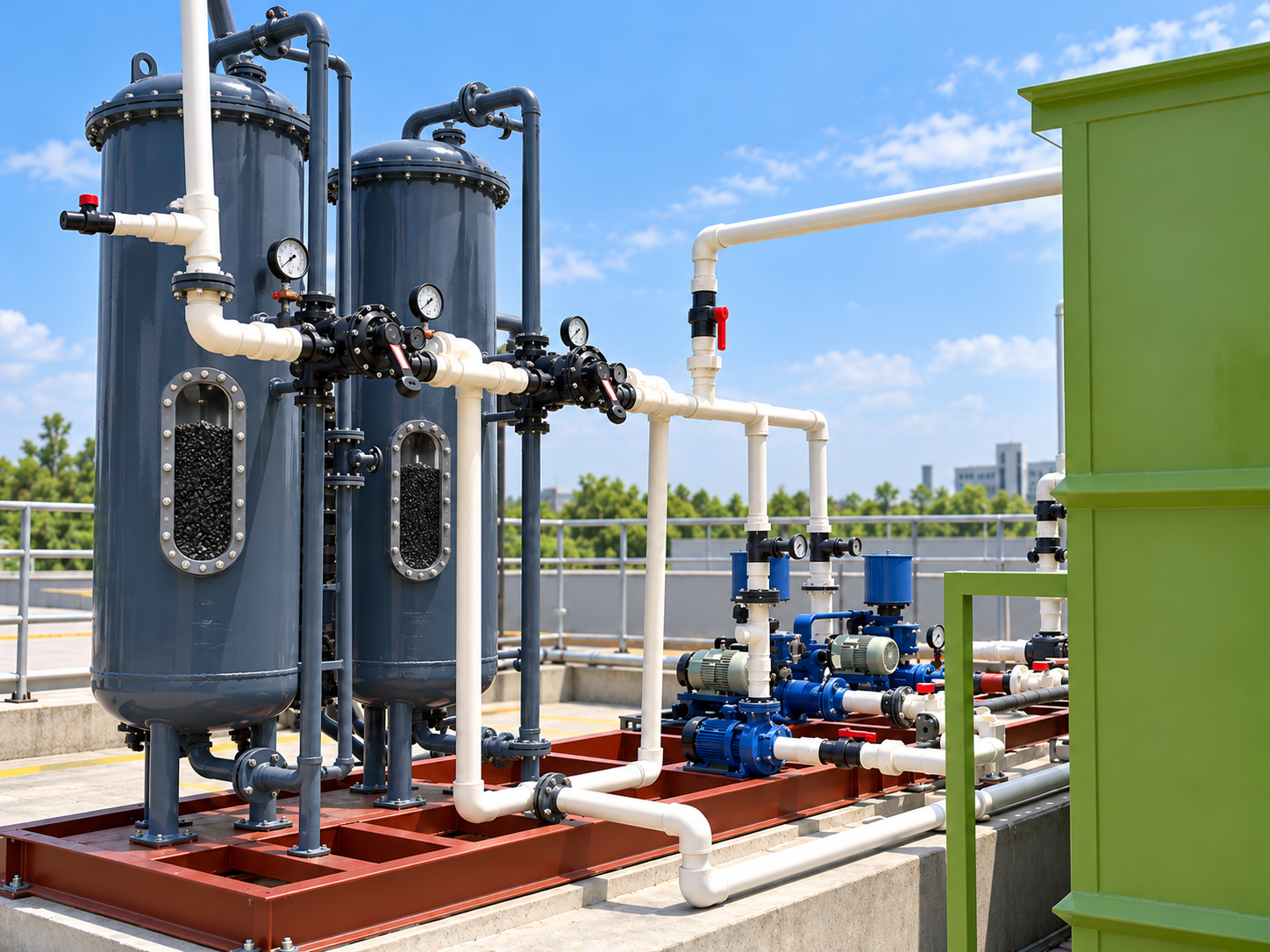
Activated Carbon for Industrial Water Filtration plays an important role in improving water quality by reducing selected organic contaminants, chlorine, unwanted taste, odor, color-causing compounds, and other adsorbable impurities from industrial water streams.
Industries require reliable water filtration systems to maintain process efficiency, protect sensitive equipment, improve water quality, and support wastewater treatment requirements. Activated Carbon provides an effective adsorption solution for many of these applications.
At Carbure Activated Carbon, high-performance Steam Activated Carbon is manufactured from premium Coconut Charcoal using superheated steam at 1000°C. This process develops a highly porous structure with strong adsorption characteristics suitable for demanding industrial water purification applications.
How Activated Carbon Works in Industrial Water Filtration
Activated Carbon works primarily through adsorption, where selected contaminant molecules move from water onto the internal surface of the carbon.
As industrial water passes through a Granular Activated Carbon filter, dissolved contaminants enter the internal pore structure and are retained on the available adsorption sites. Chlorine reduction also involves reactions at the carbon surface.
The filtration performance depends on carbon pore structure, particle size, contaminant concentration, flow rate, contact time, water chemistry, and filter-bed design.
Applications of Activated Carbon in Industrial Water Filtration
Activated Carbon is used across various industries for different water purification requirements.
Industrial Process Water Treatment
Activated Carbon helps reduce selected dissolved organic impurities, unwanted odors, and process-related contaminants from industrial water. It supports consistent water quality in manufacturing and processing operations.
Industrial Wastewater Treatment
Activated Carbon is commonly used as a polishing medium after primary and secondary wastewater treatment. It helps reduce residual organic contaminants, color-causing substances, and selected pollutants before water reuse or discharge.
RO Pre-Treatment
Granular Activated Carbon is used in selected reverse osmosis pre-treatment systems to reduce free chlorine and certain organic compounds. Proper system design and monitoring help protect chlorine-sensitive RO membranes.
Food and Beverage Process Water
Activated Carbon supports process water purification by reducing unwanted taste, odor, chlorine, and selected organic impurities. Suitable carbon grades must meet the relevant process purity and quality requirements.
Chemical and Pharmaceutical Process Water
Selected Activated Carbon grades are used for process water polishing and removal of adsorbable organic impurities. Carbon purity, ash content, extractables, and application-specific specifications are important selection considerations.
Key Benefits of Activated Carbon for Industrial Water Filtration
- Strong adsorption performance: Provides an extensive internal surface area for adsorption of suitable contaminants.
- Organic contaminant reduction: Helps reduce selected dissolved organic compounds from industrial water.
- Chlorine reduction: Supports dechlorination in appropriate water treatment systems.
- Taste and odor control: Reduces selected compounds responsible for unpleasant water taste and odor.
- Water quality improvement: Supports process water purification and wastewater polishing.
- Mechanical durability: High-hardness Coconut Charcoal based Granular Activated Carbon helps reduce particle breakdown.
- Flexible filtration applications: Suitable for fixed-bed filters, adsorption vessels, and selected industrial treatment systems.
Factors Affecting Activated Carbon Filtration Performance
The effectiveness of Activated Carbon depends on several technical and operational parameters.
Iodine Value: Provides an indication of micropore development but does not independently determine performance for every contaminant.
Pore Size Distribution: Influences the accessibility and adsorption of contaminants with different molecular characteristics.
Particle Size: Affects adsorption kinetics, hydraulic flow, and pressure drop across the carbon bed.
Hardness: Helps maintain carbon integrity during handling, backwashing, and continuous filtration.
Ash Content: Important for applications requiring controlled inorganic impurities and cleaner filtration media.
Empty Bed Contact Time (EBCT): Represents the nominal contact time calculated from the empty carbon-bed volume and water flow rate. Sufficient contact time is important for effective treatment.
Contaminant Breakthrough: Occurs when the concentration of a target contaminant in the treated water increases as the carbon bed loses effective adsorption capacity. Monitoring helps determine when carbon replacement or regeneration is required.
How to Select the Right Activated Carbon Grade
Selecting the correct Activated Carbon grade is essential for achieving reliable industrial water filtration performance.
The selection process should consider the target contaminant, required treated water quality, raw material, pore structure, iodine value, particle size, hardness, ash content, water chemistry, operating flow rate, contact time, and filtration system design.
Granular Activated Carbon (GAC) is commonly preferred for continuous fixed-bed water filtration systems, while Powdered Activated Carbon (PAC) is generally used for direct dosing, batch purification, and selected rapid treatment applications.
Laboratory testing and application trials are recommended when the contaminant profile is complex or strict treatment performance is required.
Why Choose Carbure Activated Carbon?
Carbure Activated Carbon manufactures high-performance Steam Activated Carbon from premium Coconut Charcoal using controlled steam activation technology.
Our Activated Carbon solutions support industrial process water purification, drinking water treatment, wastewater polishing, RO pre-treatment, chlorine reduction, taste and odor control, and selected organic contaminant adsorption.
We support industrial customers in selecting suitable Activated Carbon grades based on their purification requirements, technical specifications, and operating conditions.
Frequently Asked Questions
Activated Carbon is a highly porous adsorption material used to reduce selected organic contaminants, chlorine, taste and odor compounds, and other adsorbable impurities from industrial water.
Granular Activated Carbon is commonly used in continuous fixed-bed filtration systems. The appropriate grade depends on water quality, contaminant type, flow rate, contact time, and required treatment performance.
Activated Carbon improves water quality by adsorbing selected dissolved organic contaminants and reducing unwanted taste, odor, and chlorine through adsorption and surface reactions.
Important factors include pore structure, iodine value, particle size, hardness, contaminant concentration, water chemistry, flow rate, contact time, and filter-bed design.
Coconut Charcoal based Activated Carbon offers good mechanical hardness, developed microporosity, and reliable adsorption characteristics for many industrial water filtration applications.
Looking for Activated Carbon for Industrial Water Filtration?
Carbure Activated Carbon manufactures high-performance Activated Carbon for Industrial Water Filtration from premium Coconut Charcoal using advanced steam activation technology. Our Granular Activated Carbon and Powdered Activated Carbon solutions support industrial process water purification, wastewater polishing, drinking water treatment, RO pre-treatment, chlorine reduction, taste and odor control, and selected organic contaminant adsorption. Contact Carbure Activated Carbon for suitable Activated Carbon grades, technical specifications, bulk supply, export enquiries, and application support.
