
Activated Carbon for Gold Recovery | High-Performance Gold Recovery Carbon from India
Introduction
Activated Carbon for Gold Recovery is widely used in gold processing operations to adsorb dissolved gold complexes from aqueous process solutions. Its high internal surface area, pore structure, hardness, and adsorption characteristics make Activated Carbon an important adsorbent in modern gold recovery systems.
Activated Carbon is commonly used in gold recovery processes such as Carbon-in-Pulp (CIP), Carbon-in-Leach (CIL), and Carbon-in-Column (CIC), where dissolved gold is transferred from process solution onto Activated Carbon.
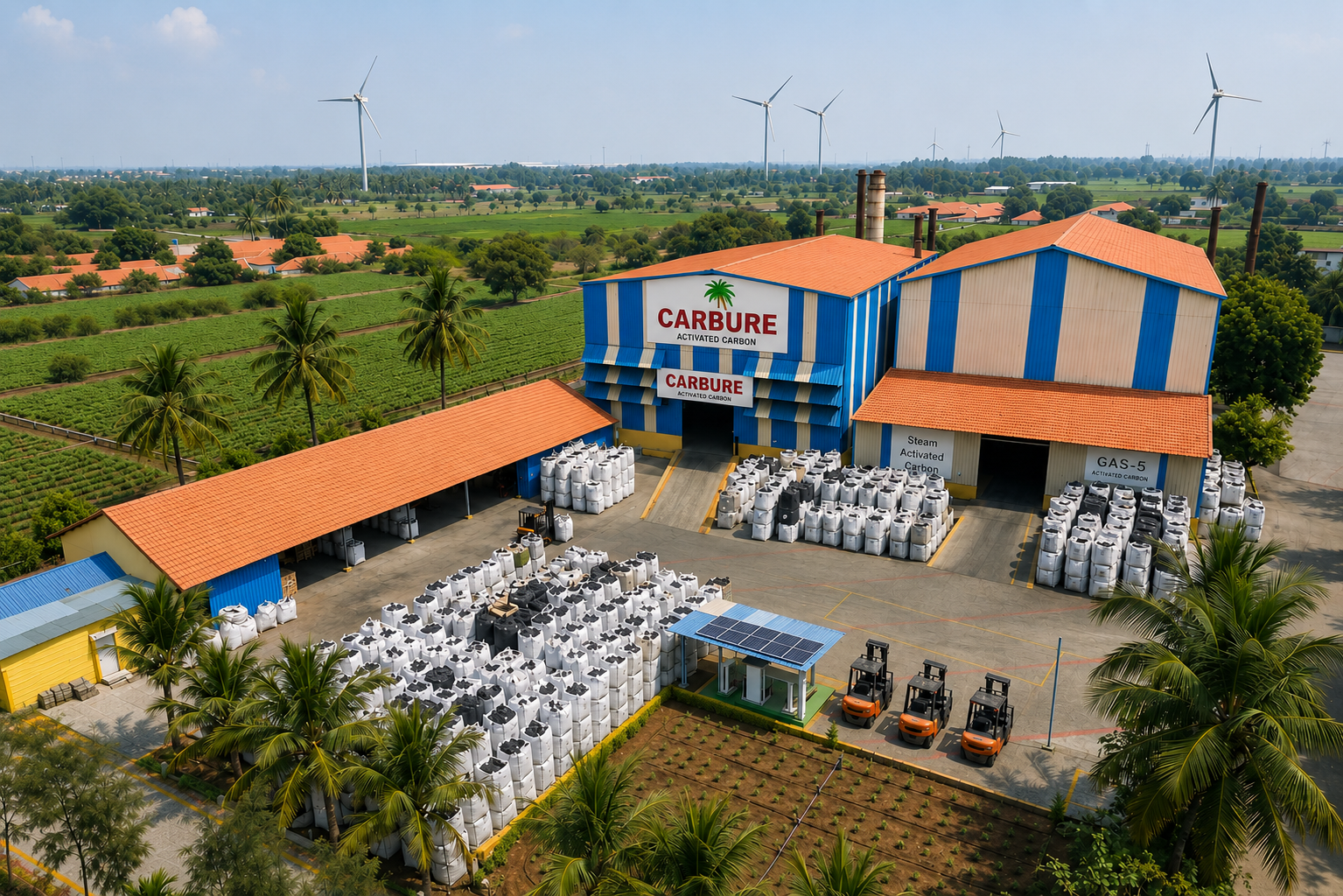
Carbure Activated Carbon is an Activated Carbon manufacturer based in Coimbatore, Tamil Nadu, India. The company manufactures Coconut Shell Activated Carbon using controlled Steam Activation technology for gold recovery and other industrial adsorption applications.
The performance of Activated Carbon for Gold Recovery depends on factors such as pore structure, surface characteristics, hardness, particle size, adsorption capacity, abrasion resistance, and the operating conditions of the gold processing circuit.
What is Activated Carbon for Gold Recovery?
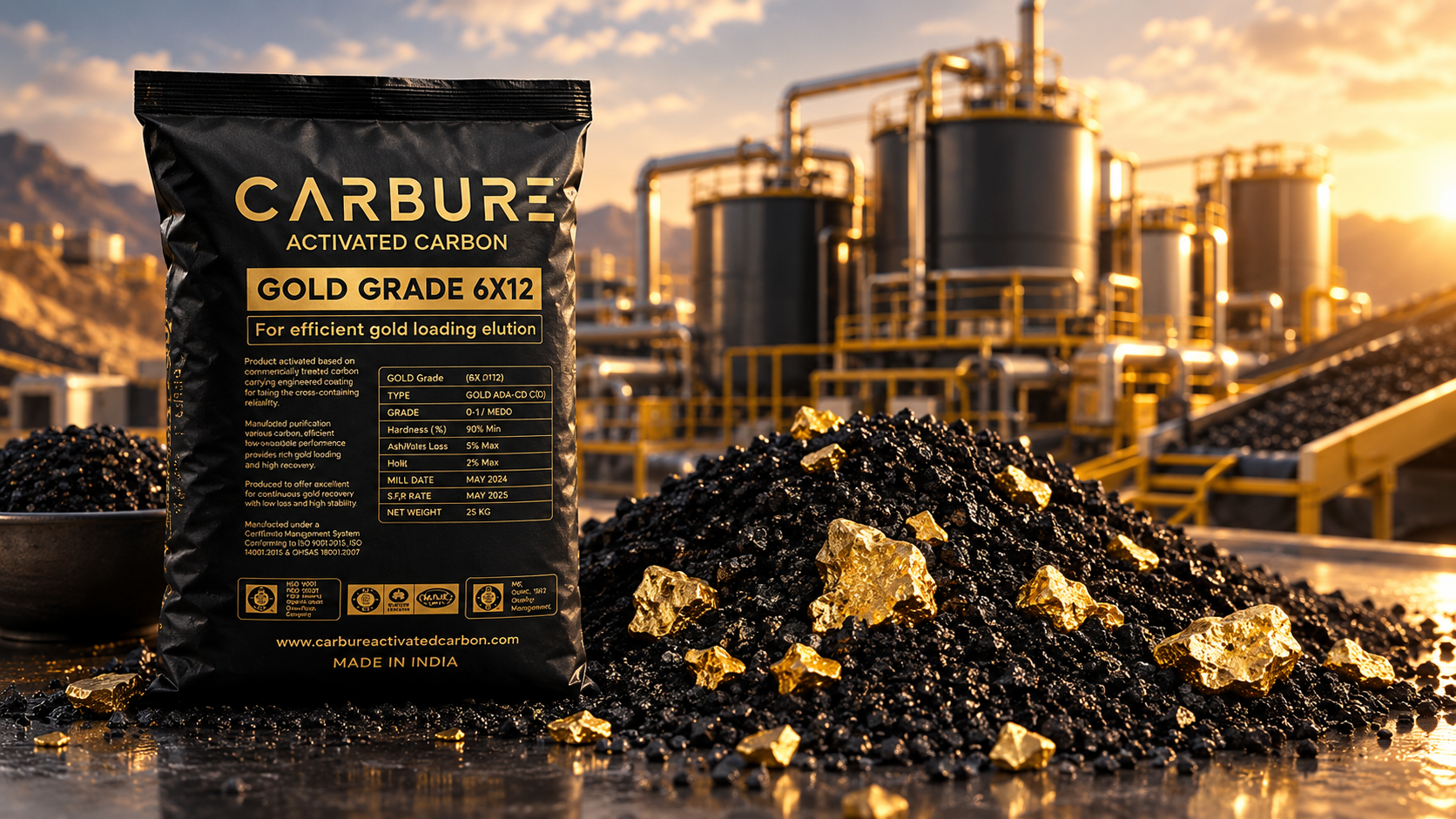
Activated Carbon for Gold Recovery is a specially selected form of Activated Carbon used to adsorb dissolved gold complexes from gold-bearing process solutions. The carbon captures the dissolved gold species onto its internal surface, allowing the gold-bearing carbon to be separated from the process stream.
Gold recovery carbon is commonly produced from coconut shell, coal, or other carbonaceous raw materials. Coconut Shell Activated Carbon is widely considered for gold recovery applications because it can provide suitable microporosity, hardness, and particle strength for adsorption systems.
In a gold processing plant, the activated carbon comes into contact with gold-bearing solution or slurry. Dissolved gold is adsorbed onto the carbon, after which the gold-loaded carbon can be removed for subsequent processing and gold recovery stages.
The appropriate Activated Carbon grade should be selected according to the gold processing method, solution chemistry, adsorption requirements, carbon handling system, and regeneration conditions.
Gold Recovery Process Using Activated Carbon
The gold recovery process begins with the preparation of gold-bearing ore or process material and the generation of a solution containing dissolved gold species. The exact process depends on the ore characteristics and the selected gold extraction technology.
In Carbon-in-Pulp (CIP) systems, Activated Carbon is contacted with gold-bearing pulp after the gold has been brought into solution. Dissolved gold is adsorbed onto the carbon as the slurry moves through the adsorption stages.
In Carbon-in-Leach (CIL) systems, gold dissolution and carbon adsorption occur within the same overall processing circuit. Activated Carbon captures dissolved gold from the process slurry as the leaching and adsorption stages proceed.
In Carbon-in-Column (CIC) systems, Activated Carbon is contained within columns through which gold-bearing solution is passed. The dissolved gold is adsorbed onto the carbon as the solution moves through the carbon bed.
Once the carbon becomes loaded with gold, it is separated from the process circuit and transferred to downstream recovery operations. The gold-loaded carbon can then undergo suitable treatment and recovery processes according to the plant design.
Role of Activated Carbon in Gold Recovery
Activated Carbon plays a central adsorption role in many modern gold recovery circuits. Its porous structure provides a large internal surface where suitable dissolved gold complexes can be adsorbed from process solutions.
The effectiveness of gold adsorption is influenced by the carbon's pore structure, surface properties, hardness, particle size, adsorption capacity, and resistance to abrasion.
In gold processing operations, Activated Carbon needs to withstand repeated handling and movement through the adsorption circuit. Carbon attrition can generate fine particles that may be difficult to retain within the process system, making carbon hardness an important consideration.
Suitable Activated Carbon can therefore contribute to efficient gold adsorption, carbon handling, and recovery operations when matched correctly to the process conditions.
Key Benefits of Activated Carbon for Gold Recovery
Properly selected Activated Carbon can provide several important characteristics for gold adsorption applications. The actual performance depends on the carbon grade, gold solution chemistry, process conditions, and plant design.
- High adsorption capacity for suitable dissolved gold complexes
- High internal surface area for effective adsorption
- Suitable pore structure for gold adsorption applications
- Good hardness and resistance to mechanical attrition
- Suitable particle size for industrial gold recovery circuits
- Can be used in CIP, CIL, and CIC processing systems
- Supports recovery of gold from aqueous process solutions
- Can be processed through suitable gold-loaded carbon recovery systems
- Suitable grades can be selected according to plant operating conditions
- Can support consistent adsorption performance in properly designed systems
Gold Mining Applications of Activated Carbon
Activated Carbon for Gold Recovery is used across different gold processing operations where dissolved gold needs to be adsorbed from process solutions.
Carbon-in-Pulp (CIP)
CIP is an established gold recovery process in which Activated Carbon is contacted with gold-bearing pulp after gold dissolution. The carbon adsorbs dissolved gold from the pulp and is subsequently separated for further processing.
Carbon-in-Leach (CIL)
CIL combines gold leaching and carbon adsorption within the processing circuit. Activated Carbon adsorbs dissolved gold as it becomes available in the slurry, supporting the recovery stage of the gold processing operation.
Carbon-in-Column (CIC)
CIC systems use carbon columns to treat gold-bearing solutions. The solution flows through the Activated Carbon bed, allowing dissolved gold to be adsorbed onto the carbon.
Gold Ore Processing
Activated Carbon can be incorporated into gold ore processing operations where dissolved gold is generated through an appropriate extraction process and requires adsorption before downstream recovery.
Gold Processing Plants
Gold processing plants use different adsorption circuit configurations depending on ore characteristics, plant capacity, solution chemistry, and recovery objectives. Activated Carbon is selected according to the requirements of the specific circuit.
Quality Factors to Check in Gold Recovery Carbon
The selection of Activated Carbon for Gold Recovery should consider several physical and adsorption characteristics. No single specification determines performance across every gold processing operation.
Pore Structure: Appropriate pore characteristics are important for adsorption of the dissolved gold species present in the process solution.
Adsorption Capacity: The carbon should provide suitable adsorption characteristics for the gold-bearing process solution and operating conditions.
Hardness: High mechanical strength can help reduce carbon attrition during movement through tanks, screens, columns, and other process equipment.
Particle Size: Particle size influences adsorption behaviour, carbon retention, screening, handling, and movement through the processing circuit.
Attrition Resistance: Resistance to breakdown is important because excessive carbon fines can create handling and recovery challenges.
Ash Content: Ash content is an important quality parameter when evaluating Activated Carbon for industrial gold recovery applications.
Moisture: Moisture content influences carbon handling, storage, transportation, and process preparation.
Regeneration Performance: Where carbon regeneration is part of the process, the carbon should be evaluated for its ability to maintain suitable adsorption performance through the plant's regeneration cycle.
Why Coconut Shell Activated Carbon for Gold Recovery?
Coconut Shell Activated Carbon is widely used in adsorption applications because coconut shell can produce a carbon structure with a high proportion of micropores when appropriately activated.
For gold recovery applications, pore structure is an important consideration because the carbon needs to provide suitable adsorption characteristics for the dissolved gold complexes present in the process solution.
Coconut Shell Activated Carbon can also provide useful mechanical characteristics when manufactured with appropriate activation and quality-control processes.
Carbure Activated Carbon manufactures Coconut Shell Activated Carbon in India using controlled carbonization and Steam Activation technology. During activation, Coconut Charcoal faces superheated steam at 1000°C to develop an extensive porous structure.
Why Choose Carbure Activated Carbon for Gold Recovery?
Carbure Activated Carbon is an Activated Carbon Manufacturer in India located in Coimbatore, Tamil Nadu. The company manufactures and supplies Coconut Shell Activated Carbon for gold recovery, water treatment, air purification, chemical processing, and other industrial adsorption applications.
Carbure's Steam Activated Carbon is manufactured from premium Coconut Charcoal using controlled activation technology. During the activation process, Coconut Charcoal faces superheated steam at 1000°C, creating a developed pore structure suitable for adsorption applications.
For Activated Carbon for Gold Recovery, product selection can be evaluated according to adsorption requirements, hardness, particle size, attrition characteristics, pore structure, operating conditions, and the requirements of the gold processing circuit.
From its manufacturing base in Coimbatore, India, Carbure Activated Carbon supports customers across India and international markets with consistent product quality, application-focused carbon selection, bulk supply capability, and technical support.
Frequently Asked Questions - Activated Carbon for Gold Recovery
Activated Carbon for Gold Recovery is a porous carbon adsorbent used to capture dissolved gold complexes from suitable gold-bearing process solutions. It is commonly used in CIP, CIL, and CIC gold processing systems.
Activated Carbon has a highly developed internal pore structure that allows suitable dissolved gold complexes to be adsorbed from aqueous process solutions. The gold-loaded carbon can then be separated for downstream recovery.
The suitable carbon depends on the gold processing circuit, solution chemistry, pore structure, adsorption capacity, hardness, particle size, attrition resistance, and regeneration requirements. Carbon selection should be based on the actual process conditions.
Yes. Coconut Shell Activated Carbon is used in suitable gold recovery applications. Its pore structure, hardness, particle size, and adsorption characteristics can make it suitable for gold adsorption systems when the grade is matched to the process requirements.
Yes. Activated Carbon is commonly used in both Carbon-in-Pulp (CIP) and Carbon-in-Leach (CIL) gold processing systems to adsorb dissolved gold from the process slurry.
Carbure Activated Carbon is located in Coimbatore, Tamil Nadu, India. The company manufactures and supplies Activated Carbon for gold recovery and other industrial purification applications across India and international markets.
Yes. Carbure Activated Carbon manufactures and supplies Coconut Shell Activated Carbon for suitable gold recovery applications. Carbon grades can be evaluated according to the requirements of the gold processing circuit and adsorption objectives.
Looking for Activated Carbon for Gold Recovery?
Carbure Activated Carbon is based in Coimbatore, Tamil Nadu, India, and manufactures high-performance Activated Carbon for Gold Recovery applications. Our Coconut Shell Activated Carbon is suitable for evaluation in gold processing systems including CIP, CIL, CIC, and related adsorption processes.
We support customers in India and international markets with application-focused Activated Carbon selection based on pore structure, adsorption capacity, hardness, particle size, attrition resistance, and process requirements.
Contact Carbure Activated Carbon to discuss your gold recovery carbon requirements, technical specifications, bulk quantities, and application-specific needs.
