
Acid Washed Activated Carbon: Benefits, Applications & Selection Guide
What Is Acid Washed Activated Carbon?
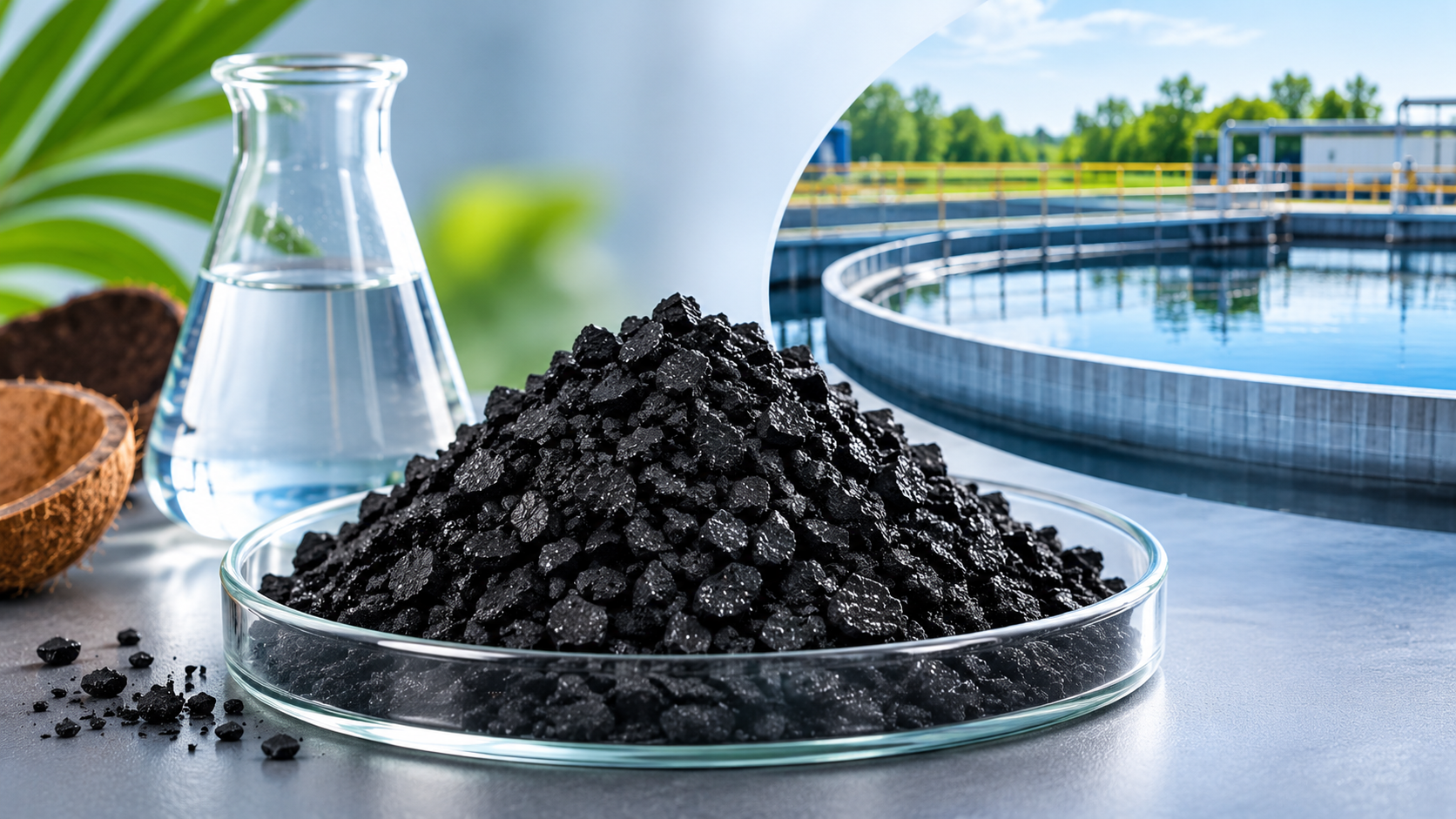
Acid Washed Activated Carbon is activated carbon that has undergone a controlled acid-treatment and rinsing process to reduce selected acid-soluble mineral impurities and inorganic residues.
For many adsorption duties, standard activated carbon provides the required performance. However, certain high-purity processes place additional limits on mineral impurities, extractables, ash content or the chemistry of substances released into the treated stream.
Acid washing can help address these requirements when the chosen carbon and treatment method are appropriate. It should be specified according to measurable product requirements rather than treated as a universal performance upgrade.
At Carbure Activated Carbon, Steam Activated Carbon is manufactured from premium Coconut Charcoal. During activation, Coconut Charcoal faces superheated steam at 1000°C, developing the porous structure required for adsorption.
Where lower mineral impurity levels are needed, customers should evaluate acid-washed carbon specifications alongside adsorption performance, physical strength and application requirements.
How Does the Acid Washing Process Work?
The acid washing process involves treating activated carbon with a suitable acid solution under controlled conditions to dissolve or mobilize selected acid-soluble mineral constituents.
The treated carbon is subsequently rinsed to reduce residual acid and soluble substances, followed by suitable dewatering, drying and quality checks as required by the product specification.
Typical Stages of Acid Washing
- Starting Carbon Assessment: The initial carbon is evaluated for ash, mineral impurities and relevant physical properties.
- Controlled Acid Contact: A suitable acid solution contacts the carbon under defined process conditions.
- Mineral Dissolution: Selected acid-soluble mineral compounds are dissolved or mobilized.
- Rinsing: The carbon is washed to reduce residual acid and dissolved substances.
- Drying and Handling: The material is prepared for its intended product form and packaging.
- Quality Verification: Relevant properties such as ash, extractables, pH and adsorption characteristics are evaluated.
Acid Washed Activated Carbon Grades and Forms
Acid washing is a post-treatment process rather than a separate particle-size category. The required carbon form depends on the intended purification system.
Acid Washed Granular Activated Carbon (GAC)
Granular grades may be specified for fixed-bed filtration, process-water polishing and other continuous adsorption systems where both physical durability and controlled extractables are important.
Acid Washed Powdered Activated Carbon (PAC)
Powdered grades may be considered for suitable batch purification processes where the carbon is contacted with a liquid and subsequently separated through filtration or clarification.
Application-Specific High-Purity Grades
Some applications require particular limits for total ash, acid-soluble impurities, pH, conductivity, particle size or other extractable substances. Such requirements should be established through technical specifications and testing.
Industrial Applications of Acid Washed Activated Carbon
Acid Washed Activated Carbon may be specified where adsorption performance must be combined with controlled inorganic impurities or extractables.
| Industrial Application | Purpose of Acid Washed Activated Carbon |
|---|---|
| High-Purity Water Treatment | Selected applications requiring controlled mineral impurities and extractables. |
| Food and Beverage Processing | Purification duties where carbon-derived inorganic residues must meet relevant process specifications. |
| Pharmaceutical Processing | Selected purification processes with strict quality and impurity limits, subject to applicable standards. |
| Chemical Manufacturing | Adsorption processes requiring control of acid-soluble inorganic residues. |
| Specialty Liquid Purification | Applications with defined ash, pH, conductivity or extractables requirements. |
| Industrial Process Water | Process-water polishing where a low-extractables carbon specification is required. |
Suitability for regulated uses must be confirmed against the specific carbon grade, process requirements and applicable quality standards.
Which Mineral Impurities Can Acid Washing Reduce?
Acid washing is intended to reduce selected acid-soluble inorganic constituents. The extent of reduction depends on their chemical form and the washing process.
- Acid-Soluble Mineral Residues: Certain mineral compounds can dissolve under appropriate treatment conditions.
- Selected Calcium and Magnesium Compounds: Some acid-soluble forms may be reduced, depending on their chemistry.
- Selected Iron-Containing Residues: Certain accessible iron compounds may be reduced by suitable treatment.
- Inorganic Extractables: Controlled washing may help reduce specified substances that could otherwise leach into process liquids.
- Residual Soluble Substances: Subsequent rinsing is important for controlling remaining acid and dissolved residues.
Acid washing does not guarantee the removal of all metals, all ash-forming constituents or every soluble impurity. Test results should establish whether the final carbon meets the required limits.
Key Benefits of Acid Washed Activated Carbon
When correctly specified and manufactured, Acid Washed Activated Carbon can offer advantages for processes with strict impurity-control requirements.
- Reduced Acid-Soluble Mineral Content: Helps lower selected inorganic residues that respond to the acid treatment.
- Controlled Ash-Related Impurities: May support lower total ash or acid-soluble ash specifications, depending on the starting carbon.
- Reduced Inorganic Extractables: Can help limit selected carbon-derived impurities entering sensitive process streams.
- High-Purity Process Suitability: Supports evaluation for applications with defined impurity specifications.
- Adsorption Functionality: Retains the role of activated carbon as an adsorbent, subject to verification of its post-treatment performance.
- Process Consistency: Documented quality parameters help customers evaluate suitability across batches.
- Flexible Product Forms: Acid-washed specifications can be considered for appropriate granular or powdered grades depending on the process.
Technical Properties and Performance Factors
For Acid Washed Activated Carbon, impurity control and adsorption performance should be assessed together.
Total Ash Content
Measures the inorganic residue remaining after a specified ashing test. It is useful but does not identify individual extractable compounds.
Acid-Soluble Ash and Extractables
These tests help determine whether the grade meets application-specific limits for selected inorganic residues.
pH and Conductivity
Relevant measurements may indicate residual soluble substances and help assess compatibility with sensitive process streams.
Iodine Value and Pore Structure
Iodine value provides an indication of micropore development, but does not guarantee adsorption performance for every target molecule.
Particle Size and Hardness
Particle size affects contact and flow behavior; hardness influences mechanical durability and fines formation, particularly in fixed-bed systems.
Contaminant-Specific Adsorption Testing
Adsorption performance should be checked against the actual compounds and operating conditions. Acid treatment can alter surface chemistry, so the intended performance must not be assumed.
How to Select the Right Acid Washed Activated Carbon Grade
Grade selection should begin with a clear understanding of the process and its impurity tolerances.
1. Define the Purity Requirement
Identify maximum acceptable levels for ash, acid-soluble impurities, extractables or specific inorganic constituents.
2. Identify the Adsorption Target
Document the compounds to be removed and the required treated-product quality.
3. Review Carbon Form and Particle Size
Choose a suitable granular or powdered form according to flow, contact time and separation requirements.
4. Check Pore Structure and Iodine Value
Evaluate these parameters alongside contaminant-specific tests rather than relying on a single index.
5. Confirm pH and Conductivity Limits
Review the specified test methods and acceptable results for the intended process.
6. Evaluate Hardness and Fines
For packed beds, consider abrasion resistance, particle integrity and pressure-drop requirements.
7. Verify Application Standards
Confirm all relevant drinking water, food contact, pharmaceutical or customer-specific requirements before use.
8. Request Testing and Documentation
Use technical data, batch testing and, where appropriate, laboratory or pilot trials to verify suitability.
Coconut Charcoal Based Acid Washed Activated Carbon
Coconut Charcoal is a raw material used to manufacture Steam Activated Carbon with developed microporosity and good mechanical strength for many purification applications.
During activation at Carbure Activated Carbon, Coconut Charcoal faces superheated steam at 1000°C. The resulting carbon properties depend on the starting material and controlled activation conditions.
For applications that also require reduced acid-soluble inorganic impurities, an appropriately specified acid-washed grade may be considered. The need for acid washing should be established by the process requirement, not assumed from the raw material alone.
Why Choose Carbure Activated Carbon?
Carbure Activated Carbon manufactures Steam Activated Carbon from premium Coconut Charcoal for industrial adsorption and purification applications.
For customers evaluating Acid Washed Activated Carbon, it is important to match the carbon grade to required ash, extractables, pH, conductivity, particle size and adsorption specifications.
Contact Carbure Activated Carbon to discuss technical requirements, grade suitability, documentation, bulk supply and export enquiries. Product-specific availability and compliance should be confirmed before ordering.
Frequently Asked Questions - Acid Washed Activated Carbon
Acid Washed Activated Carbon is activated carbon that undergoes a controlled acid treatment and subsequent rinsing to reduce selected acid-soluble mineral impurities. The resulting properties depend on the starting carbon, treatment process and final product specifications.
Acid washing is used when an application requires lower acid-soluble mineral content, controlled ash-related impurities or reduced inorganic extractables. It is not automatically necessary for every adsorption application.
Not necessarily. Acid washing primarily modifies the inorganic impurity profile. Its effect on adsorption varies with the carbon grade, treatment conditions, pore structure and target contaminants; performance should be tested for the intended use.
Potential applications include selected high-purity water treatment, food and beverage processing, pharmaceutical and chemical purification, and other processes with strict extractables or mineral-impurity requirements, subject to grade-specific approval.
Standard activated carbon is selected mainly for its adsorption and physical properties. Acid Washed Activated Carbon receives an additional treatment intended to reduce selected acid-soluble inorganic residues. Neither grade is universally better; suitability depends on process specifications.
Review acid-soluble ash or extractables, total ash, pH, conductivity, particle size, hardness, pore structure, iodine value and contaminant-specific adsorption performance. Confirm application standards and request testing or a technical specification before use.
Looking for Acid Washed Activated Carbon?
Carbure Activated Carbon manufactures Steam Activated Carbon from premium Coconut Charcoal for industrial purification applications. If your process requires Acid Washed Activated Carbon with controlled acid-soluble mineral impurities, ash content, pH, conductivity or other purity parameters, contact our team to discuss the required grade specifications, adsorption performance, technical documentation, bulk supply and export enquiries. Suitability and availability should be confirmed against your application requirements.
